The 100/1 Winner We Found, Backed, and Missed

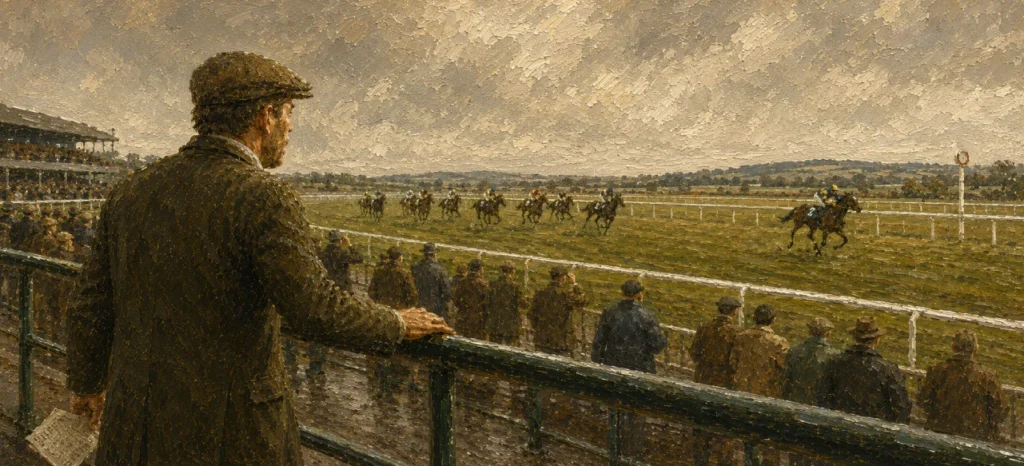
February 2017. A bumper horse called Samson’s Reach, trained by a yard with zero winners from 88 attempts in the discipline, won at Bangor at 100/1. He was in the notebook. He had been backed on his previous run. And on the day he won, he ran without a mention — no flag, no bet, nothing. This is the story of how a 100/1 winner was identified, backed, and then missed at the moment it mattered. The lesson has not aged a day.

Run 1: The Debut

Ffos Las — Bumper
Late 2016
Samson’s Reach finished a staying-on 7th of 14, beaten 14¼ lengths, on debut at 50/1. The form looked solid enough on paper, but it was the way he finished that caught the eye. He looked beaten early, plugged on when most horses in his position would have emptied, and kept finding to the line. For a yard with zero bumper winners from 88 runners, that effort demanded a notebook entry. The trainer’s record in bumpers made any sign of ability worth marking up further — if the horse showed anything at all, it was despite the preparation, not because of it.
SP: 50/1
Result: 7th of 14
Beaten: 14¼L
Note: Staying on when beaten — notebook entry

Run 2: The Bet

Newbury
18 January 2017
Wayne Hutchinson booked. The yard’s overall strike rate sat around 5–6%, but Hutchinson’s record for the trainer told a different story: 12 wins and 14 places from 87 rides — near a 30% in-the-money rate. That jockey-trainer combination, on a horse already flagged from debut, was enough to act. Opening price 80/1. Advised at ½pt each-way (1pt total from the bank) with the full reasoning published on the daily post. The usual reactions followed — disbelief that anyone would touch a horse at that price. By the off he had drifted to 100/1. He finished 11th of 14, beaten 28 lengths, completely tailed off by halfway. It looked like the run people expect from a 100/1 shot.
SP: 100/1
Stake: ½pt EW (1pt total)
Result: 11th of 14
Beaten: 28L
P&L: −1pt

The Newbury run was discouraging. The debut had shown a horse with something to work with. Newbury showed a horse that appeared to have nothing. A poor start to the betting year compounded the doubt. When the next entry came, it was easy to let it slide. Too easy.

Run 3: The Miss

Bangor
February 2017
Quieter race. David Bass booked. His record for the yard: 1 win from 10 rides — not a negative signal, and certainly not enough to abandon the idea. But the Newbury run, the poor form cycle, and the effort of fronting up to followers after a losing bet made it easy to overlook. No flag on the daily post. No bet. No mention at all.
16:25 Bangor
Samson’s Reach
100/1
Travelled strongly, sat behind the pace, and put away the 9/2 favourite inside the final furlong. The horse that looked finished at Newbury was never off the bridle at Bangor.
A ½pt each-way bet at 100/1 would have returned +60pts from a 1pt total stake. Instead, the notebook horse was watched from the sofa. The read was right. The conviction was not.
+60pts
Left on the table

The Lesson

The Newbury run was too bad to be true. A horse that stayed on from an unpromising position on debut, for a yard that almost never wins bumpers, does not suddenly become a non-stayer at a flat track. There was every chance the run was an aberration — a bad day, an immature horse not handling the occasion, a jockey who could not get a tune from an inexperienced type. That is what the notebook is for: to hold judgement through the noise and wait for the next opportunity.

The mistake was not backing the horse at Newbury. The mistake was abandoning the thesis after one bad data point. The debut said the horse had ability. The Newbury run said the ability did not show up that day. Those are two different conclusions, and the second one does not cancel the first.

The principle: If a run is too bad to be true, assume it was. If you identified a horse at a price and the fundamentals have not changed, do not abandon it after one poor performance. Horses are not machines. They have bad days. The notebook exists to carry your conviction through the runs where conviction is hardest to maintain.

This is the practical application of everything the Five Principles describe. The staking was right. The process was right. The identification was right. What failed was discipline at the third run — the willingness to trust the process when the most recent evidence argued against it. Every serious bettor will face this moment. The ones who stay in the notebook win at 100/1. The ones who flinch watch from the sofa.

The Notebook in Action

Every selection on this site is the product of this process — the reasoning published before the off, the result logged after.

Today’s Dial →
What does "Each-Way" mean? How do I follow this bet?

An each-way bet is two bets in one — a Win bet and a Place bet, each for the same stake. So 1PT Each-Way = 2PT total from your bank.

The Place part pays out if your horse finishes in the places (usually top 3–4 depending on field size and bookmaker). The odds for the place portion are a fraction of the win odds — typically 1/4 or 1/5.

So when the card shows 1PT Each-Way, that means 2PT comes from your bank — 1PT on the win, 1PT on the place. If you’d prefer to risk just 1PT from your bank, stake it as a ½PT Each-Way instead. The win part pays at the full advertised odds if the horse finishes first.

Always shop around for the best odds — even a point or two extra on a long-priced selection makes a big difference over time.

← Previous Dial Browse the archive Next Dial → Browse the archive

Get tomorrow's pick before the off

Every selection posted before the race — the angle, the reasoning, the price. Free, no fluff.
Tool
Bet Calculator
Work out returns on singles, doubles, trebles, accumulators — each-way, Rule 4, and BOG handled.
Open the calculator ›
Track Record
Running P&L+102.72pts
Bets posted141
Place rate22%
SinceDec 2025
Full P&L record ›
more posts: