The Cheltenham Festival
Four days, 28 races, and a betting week unlike any other in National Hunt racing — the ante-post market, the travel, the tickets, the betting ring, and what actually happens to the form once everyone’s gone home.
Trainers build entire seasons around these four days at Prestbury Park. Ante-post markets start moving in November for races that won’t run until March, and by the time the Gold Cup goes off on Friday afternoon, a year’s planning either pays off or it doesn’t.
The Four Days, Race by Race
The Festival runs Tuesday to Friday in mid-March — the 2027 renewal is confirmed for 16–19 March — and has done as a four-day meeting since 2005, when a fourth day was added specifically so every day could carry its own championship race, building to the Gold Cup on the Friday. Seven races run each day, twenty-eight across the week, and each day has kept its own identity.
Tuesday
Champion Day · Old CourseOpens with the Supreme Novices’ Hurdle, the traditional curtain-raiser, before the day builds to the Champion Hurdle (2m½f) — the two-mile hurdling crown. The Arkle Challenge Trophy, the championship novice chase, also runs today, and has form as a genuine crystal ball: Moscow Flyer, Sprinter Sacre and Altior all won it before going on to Champion Chase glory.
Wednesday
Ladies’ Day · Old CourseThe Festival’s fashion day — and its name has had a wobble: traditional “Ladies Day” gave way to a neutral “Festival Wednesday,” then “Style Wednesday” for 2024 and 2025, before The Jockey Club reverted to Ladies’ Day for 2026. The racing is the Queen Mother Champion Chase, the two-mile chasing championship, alongside the Champion Bumper and the novice Grade 1s.
Thursday
St Patrick’s Thursday · New CourseThe only day with two championship-calibre Grade 1s: the Ryanair Chase (2m4½f, the Festival’s intermediate-distance chase championship) and the Stayers’ Hurdle — long known as the World Hurdle — over three miles of out-and-out stamina. The Mares’ Hurdle also runs today, and the day itself leans Irish in tone.
Friday
Gold Cup Day · New CourseThe Cheltenham Gold Cup (3m2½f), the meeting’s whole reason for being. The card also carries the Triumph Hurdle (the juvenile championship) and the County Hurdle — once the very last race of the week and nicknamed the “getting-out stakes,” until a running-order change moved it earlier. The Gold Cup and County Hurdle share an origin: when the Gold Cup was inaugurated in 1924 it ran as a supporting race to the County, before quickly eclipsing it.
All 28 races
Seven a day, in running order. Grade 1s are the championship and novice championship events; the handicaps are marked, and they are where the biggest fields are. Race titles carry sponsors’ names that change from year to year, and the programme itself is occasionally reshaped, so treat this as the shape of the week rather than a printed card.
Tuesday
Champion Day · Old Course- Supreme Novices’ Hurdle · Grade 1 · 2m
- Arkle Challenge Trophy · Grade 1 · 2m
- Juvenile Handicap Hurdle (the Fred Winter) · handicap · 2m
- Ultima Handicap Chase · handicap · 3m1f
- Champion Hurdle · Grade 1 · 2m
- Plate Handicap Chase · handicap · 2m4f
- National Hunt Chase · Class 2 novices’ handicap · 3m6f
Wednesday
Ladies’ Day · Old Course- Turners Novices’ Hurdle (long the Ballymore) · Grade 1 · 2m5f
- Brown Advisory Novices’ Chase · Grade 1 · 3m1f
- Cup Handicap Hurdle · handicap · 2m5f
- Cross Country Handicap Chase · handicap · 3m5½f
- Queen Mother Champion Chase · Grade 1 · 2m
- Grand Annual Handicap Chase · handicap · 2m
- Champion Bumper · Grade 1 · 2m½f
Thursday
St Patrick’s Thursday · New Course- Mares’ Novices’ Hurdle · Grade 2 · 2m1f
- Novices’ Limited Handicap Chase · Grade 2 handicap · 2m4½f
- Mares’ Hurdle · Grade 1 · 2m4½f
- Stayers’ Hurdle · Grade 1 · 3m
- Ryanair Chase · Grade 1 · 2m4½f
- Pertemps Final · handicap · 3m
- Kim Muir Challenge Cup · handicap · 2m4½f
Friday
Gold Cup Day · New Course- Triumph Hurdle · Grade 1 · 2m1f
- County Handicap Hurdle · handicap · 2m1f
- Mares’ Chase · Grade 2 · 2m4½f
- Albert Bartlett Novices’ Hurdle · Grade 1 · 3m
- Cheltenham Gold Cup · Grade 1 · 3m2½f
- Hunters’ Chase · amateur riders · 3m2½f
- Martin Pipe Handicap Hurdle · conditional jockeys’ handicap · 2m4½f
Gates open at 10:30am, the first race is at 1:20pm, and the last comes down around 5:20–5:40pm — a six-and-a-half-hour day on site, most of it before the feature race even runs.
Ante-Post: Backing It Before It Starts
Cheltenham is the single biggest ante-post market in UK and Irish jump racing, for a simple reason: it’s a fixed date trainers build an entire winter around, so the market can form a genuine view months out. For the full mechanics of how ante-post betting works — the trade-off between bigger prices and a lost stake if your horse doesn’t run — see our Ante-Post Betting Explained guide. What follows is specific to how that plays out at the Festival.
Entries build in stages, not all at once, and that staggered calendar is exactly why the market sharpens through the winter rather than settling early. The big chases — Gold Cup, Champion Chase, Ryanair — open for entry in early January; the championship hurdles close around mid-January; novice races follow a week or so later; and the twelve handicaps — the County, Coral Cup, Pertemps, Grand Annual and Martin Pipe among them — have recently closed for entries around mid-February, with weights published about a week after that. It’s a genuinely unsettled picture even close in: Racing Post has noted years where, as late as the first week of January, there wasn’t a single odds-on favourite anywhere across the entire 28-race card. The open championship races tend to have the smallest, clearest fields and the steadiest markets; the big handicaps stay volatile right up to entry deadlines, because connections can still be deciding which race a horse actually goes for.
Traditional ante-post vs Non-Runner No Bet
Under standard ante-post terms, a non-runner — injury, unsuitable ground, a change of target race — loses the stake outright. Non-Runner No Bet (NRNB) refunds it as cash instead, usually at a shorter price than the traditional quote. By Festival week in 2026, most major firms were running NRNB across all 28 races — but that is a commercial decision each firm takes afresh, and terms and start dates vary operator to operator. Check the current terms for the meeting you are betting into rather than assuming last season’s carry over. When Constitution Hill was ruled out of the 2026 Champion Hurdle, backers who’d taken him under NRNB simply got their money back: proof of why NRNB has become the safer default for the championship races specifically.
The appeal of taking a price early is straightforward: a Cheltenham ante-post bet can pay out at several times the price available once the field is confirmed and the market has settled. The Festival’s own history is full of examples. In 1991, Noel Furlong’s Destriero was backed for the Supreme Novices’ Hurdle on the strength of an eye-catching Leopardstown maiden win — roughly £300,000 of ante-post money went on, and the horse obliged for an estimated £1.5m payout. In 2012, Son Of Flicka was cut from 66/1 to 16/1 for the Coral Cup after trainer Donald McCain flagged that spring ground would suit — a reported £900,000 result for owner Phil Williams. JP McManus’s very first big Cheltenham touch came in 1982, when Mister Donovan was backed from 6/1 into 9/2 for the Wednesday’s Grade 1 novices’ hurdle over 2m5f — the Ballymore for years, currently the Turners — on a stake McManus later called the bet that shaped his whole involvement in the sport. Drifts happen for the mirror-image reasons: a setback, a piece of unconvincing homework, ground that turns against a horse, or connections quietly re-routing a runner toward Aintree instead.
Best Odds Guaranteed is worth a specific word here, because the assumption trips people up: standard BOG promotions often exclude ante-post bets outright (Paddy Power’s general terms are one example), even though the same firm may run a separate BOG offer specific to Festival ante-post markets. Never assume a day-of BOG promise covers a ticket you took in November — check the ante-post terms specifically.
Preview Nights: Tips Straight From the Yards
In the weeks before the Festival, trainers, jockeys and pundits go on the road and put their opinions on the record in front of a live room — a genre of event that exists nowhere else on the racing calendar in quite the same volume. The two biggest are the Official Cheltenham Preview Evening, held in The Centaur at Cheltenham Racecourse itself and organised by the Jockey Club, typically in the first week of March; and the At The Races Preview Night, a broadcast event streamed live on attheraces.com and YouTube a little earlier in February, fronted by regular tipsters like Kevin Blake and Matt Chapman. Beyond those two, pubs, racing clubs and bookmakers run their own local preview nights up and down the country throughout the same run-up — the two above are simply the ones with the national profile.
The night Jamie Codd shouted for a horse that wouldn’t start
The best-known preview night story belongs to amateur jockey Jamie Codd, who worked Labaik on Gordon Elliott’s gallops and stood up at a preview night to call him — then a 50/1 shot for the 2017 Supreme Novices’ Hurdle — “one of the best work horses he’d ever sat on.” The room laughed: Labaik had refused to start in all three of his previous races, a habit bad enough to make him a standing joke. He justified every word of it, winning the Supreme at 25/1. It’s the standing example of why preview nights are worth a listen even when the horse being backed sounds like a joke — the people talking are often the ones who’ve actually sat on it that morning.
Treat what you hear the same way you’d treat any single source: useful, sometimes decisive, never the whole picture. Trainers talk their own book by nature — nobody stands up at a preview night to say their runner is working badly — and for every Labaik there are plenty of confidently-backed fancies that never place. The value is in the detail rather than the conviction: a trainer flagging that the ground has turned in a horse’s favour, or a work rider comparing this year’s novice to a specific previous winner, is the kind of specific, checkable claim worth weighing against the course data and strategy below — not a tip to follow blind because someone said it with a straight face.
Reading the Track: Old Course, New Course and the Hill
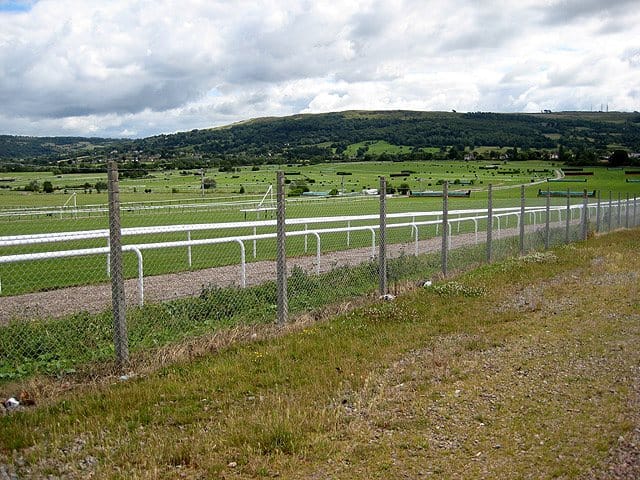
Most Festival racing uses two turf circuits, and mixing them up is the most common analytical slip a casual Festival punter makes. Tuesday and Wednesday are run on the Old Course; Thursday and Friday switch to the New Course. Wednesday’s Cross Country Chase is the exception — it goes on Cheltenham’s separate specialist cross-country course, over banks, ditches and rails rather than standard fences, and it is not simply another Old Course chase: treat its form as its own discipline. They share the same hillside but diverge in the back straight, and that routing difference genuinely changes what kind of horse wins.
Old Course — Tue & Wed
Sharper, with an earlier turn for home and a shorter final climb. What it punishes is being at the very back rather than being off the pace: across 60 Festival chases in a ten-year sample, prominent runners won 20 and mid-division 18, against 10 for outright leaders — so a handy or midfield position has been much the safest place, not the lead itself. Just one winner came from the deepest hold-up category, though another 11 won from towards the rear, so this is about the last of the field rather than anything off the pace.
New Course — Thu & Fri
A wider sweep down from the top of the hill sends the field further out before the turn, making the run-in longer and the uphill finish far more searching. Front-runners hold their own better here than the average UK jumps track — go for home too soon and you still get run down, but a proven front-runner is a live threat in a way it usually isn’t on the Old Course.
That’s precisely why the week’s two principal open championship stamina tests — the Stayers’ Hurdle and the Gold Cup — sit on the New Course days, while the speed-favouring Champion Hurdle and Champion Chase sit on the Old Course. Every horse also has to answer the same question at the same spot: a downhill run past the last few obstacles that builds speed and stride length, into a sudden uphill finish. Cheltenham’s hill rises only around 10 metres — shallower than the climbs at Navan or Leopardstown — but the abruptness after a lengthened downhill stride is what catches horses out, not the gradient alone. Good ground tilts the balance back toward speed and produces faster, more spread-out racing; testing or soft ground compounds the hill’s effect and finds out anything short of fully tuned for the trip.
On the training side, Ireland has dominated the Prestbury Cup — the Ireland-vs-Britain contest for most Festival winners, introduced in 2014 — in almost every year since its inception, a rivalry rooted much further back in Vincent O’Brien’s Cottage Rake winning three straight Gold Cups from 1948 and the Arkle–Mill House duels of the 1960s. Willie Mullins has been outright leading trainer at the Festival in the large majority of the last decade’s renewals, with Gordon Elliott taking most of the rest — no British trainer has topped the table in ten years, and both operations now build entire seasons around the meeting rather than treating it as one fixture among many.
Betting Strategy: Turning the Data Into a Decision
The 28 races do not split neatly into two. Thirteen are Grade 1s and twelve are handicaps, with the categories overlapping at the edges — the National Hunt Chase is a novices’ handicap, the Cross Country a handicap on its own specialist course, and the Jack Richards a Grade 2 limited handicap — which is why a single championship-versus-handicap rule of thumb misreads most of the week. Four groups, four approaches. The five open championship Grade 1s — Champion Hurdle, Champion Chase, Ryanair Chase, Stayers’ Hurdle and the Gold Cup — run small, well-exposed fields where the market is usually close to right; the value is in spotting an over-bet short price, not a 20/1 shock. The novice and juvenile Grade 1s — Supreme, Arkle, Brown Advisory, Albert Bartlett, Triumph, Champion Bumper and the rest — are the opposite kind of problem: lightly raced horses, jumping still unproven, and improvement that the form book has not caught up with. The handicaps are where ratings, plots, qualification and pace do the work, and where the gap between what the handicapper thinks a horse can do and what it is about to show is widest. And a handful of races — the Hunters’ Chase, the cross-country, the mares’ races — run to their own logic entirely and are best judged on specialist form.
The Grade 1s
Thirteen of the 28. In the open championships, small fields and tight form mean the market is usually close to right — use the Old Course/New Course split above to rule runners in or out rather than hunting a surprise package. In the novice and juvenile Grade 1s the opposite applies: the form is thin enough that a horse can still be improving faster than its rating says.
The handicaps
Twelve of the 28, and where the biggest fields and the biggest market gaps are. Bigger fields also mean better each-way value — check the place terms before backing, because extra places beyond the standard four can make a mid-priced runner the better bet than the obvious favourite.
Bank discipline
Treat ante-post money and on-the-day money as separate pots, decide a level stake before racing starts, and don’t let a bad Tuesday talk you into a bigger bet on Wednesday.
The track data above and the trainer trends within it are filters, not certainties — a starting shortlist, not a final answer. Course bias narrows a twenty-runner handicap down to the six or seven that suit the conditions; pace and going narrow it further; form and fitness make the final call. For the mechanics behind each-way cover and place terms, see our Each-Way Betting and Place Terms Explained guides; for reading the card itself, see How to Read a Racecard.
Getting There
Cheltenham drew 226,223 people across the four days in 2026 — plan the travel with the same care as the bets.
By train. Cheltenham Spa is the only station that matters — there’s no closer one — and it’s around 1.5–2 miles from the course, a 30–40 minute walk along a mostly flat route on the Jockey Club’s own guidance — allow longer in Festival crowds. The station car park closes for the whole of Festival week and there’s no cash machine at the station. Trains run busiest 8–10am and again 5–8pm, with a queuing system enforced for the journey home; National Rail and GWR lay on thousands of extra seats specifically for Festival week, from London, Bristol and Worcester.
The shuttle. Stagecoach runs an official raceday shuttle linking the station, town centre and the racecourse’s own transport hub, taking 15–20 minutes and currently £10 return or £6.50 for a single (the single is afternoon-only) — check before travelling — note that ordinary Stagecoach travel passes don’t cover it; you need the specific raceday ticket.
By road. The course sits just off Junction 11 of the M5, with the A40 and A435 the main approach roads. National Highways flags likely delays on the M5 between J9 and J11 during Festival week, and Gold Cup Friday in particular has seen the exit ramp at J11 badly congested as the entire day’s crowd converges at once. On-site parking must be pre-booked — there’s no parking sale on the day — and a temporary road-layout change closes Evesham Road southbound for several hours after racing each day.
Park and ride. The official Festival park-and-ride hub is Arle Court, directly off J11, with a combined parking-plus-shuttle ticket covering up to five people and a roughly 30-minute journey in. Given the reported congestion right at the motorway exit on the busiest day, arriving mid-morning rather than cutting it fine to the 1:20pm first race is the difference between a smooth transfer and missing race one.
Which day is worst
Friday (Gold Cup Day) is unambiguously the peak — attendance runs to the course’s full capacity, more than double a typical November raceday, and it carries the worst-documented road and shuttle queues. Tuesday and Wednesday are comparatively calmer; Thursday can spike unpredictably if it coincides with any rail disruption.
A parking tip, if you’re driving
Book ahead at Cheltenham Tigers Rugby Club, which has run Festival parking for years at a fraction of the on-course rates — check the current price with them direct. It’s a fifteen-minute walk from there — over the bridge by Cheltenham Racecourse train station, where you might catch the At The Races Express pulling in, then across the car park to the north-east entrance. The club also serves a cooked breakfast from early doors, so get in good time and eat properly before the walk over. The real advantage comes at the end of the day: getting out is easy, well clear of the gridlock that builds up in the town centre once racing’s finished.
By air. Birmingham and Bristol airports are the realistic gateways, both around an hour out by train or road. Gloucestershire Airport at Staverton is only a few miles from town and gets genuinely busy with private and helicopter traffic during Festival week, but has no scheduled passenger flights — relevant mainly to owners and hospitality guests rather than the average racegoer.
By coach. National Express runs dedicated Festival services from twenty-plus UK pickup points — London, Birmingham, Liverpool, Swansea, Leeds among them — dropping within a couple of minutes’ walk of the gates, with tickets currently advertised from £33 — check current fares before booking, as they move year to year like everything else on this page. Whichever mode you pick, the same rule holds: get there earlier than feels necessary, and never plan on buying parking or a park-and-ride ticket on the day.
Tickets, Enclosures and the Day Itself
Cheltenham splits into three enclosures, and which one you pick shapes your whole day more than most first-timers expect. There’s no “Centre Court” or “County” enclosure here — that naming belongs to other venues; Cheltenham’s own three are Club, Tattersalls and Best Mate.
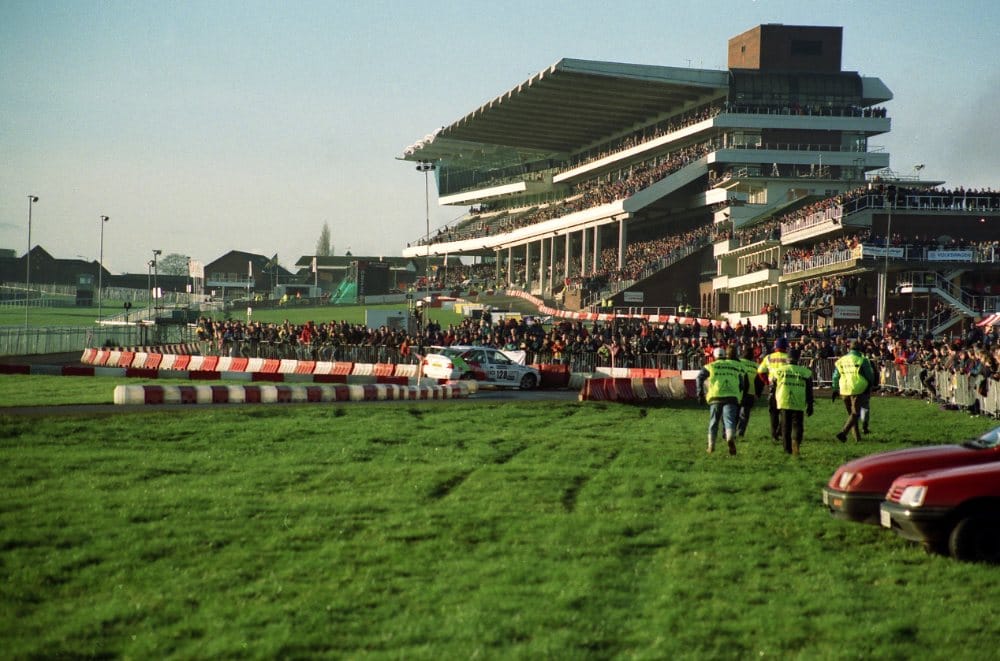
Club
The top tier: main grandstand, lawn access, views around the winning post, Parade Ring and pre-parade paddock. A Club ticket also cascades down into Tattersalls and Best Mate.
Tattersalls
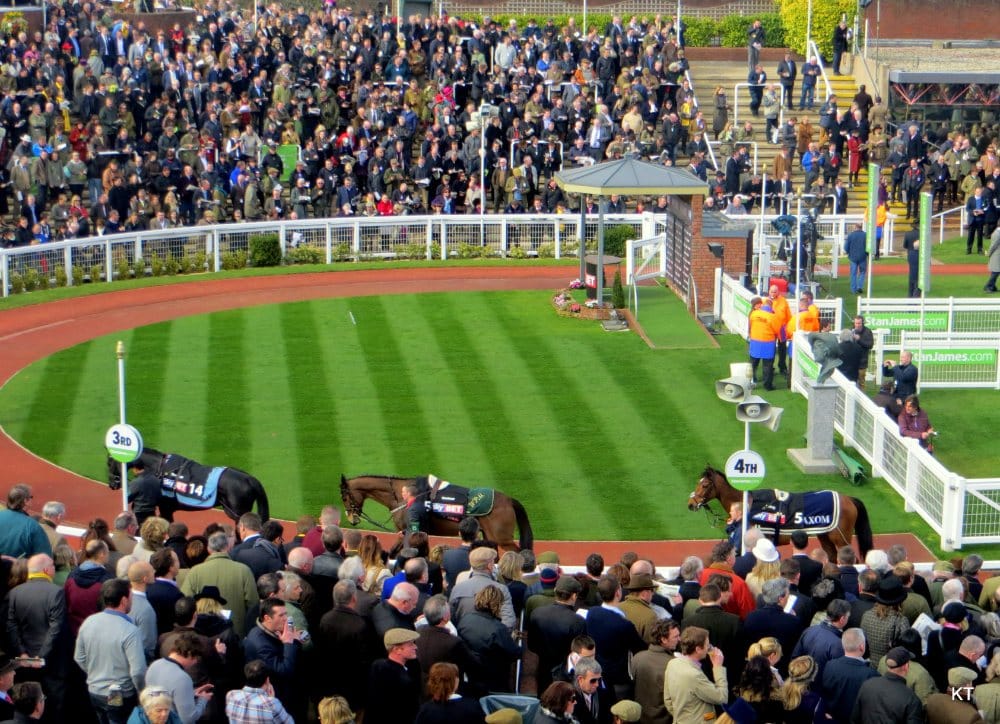
The busiest, most central enclosure — full access to the biggest betting ring, the Parade Ring, Tented Village and Guinness Village. The sensible middle ground between price and proximity.
Best Mate
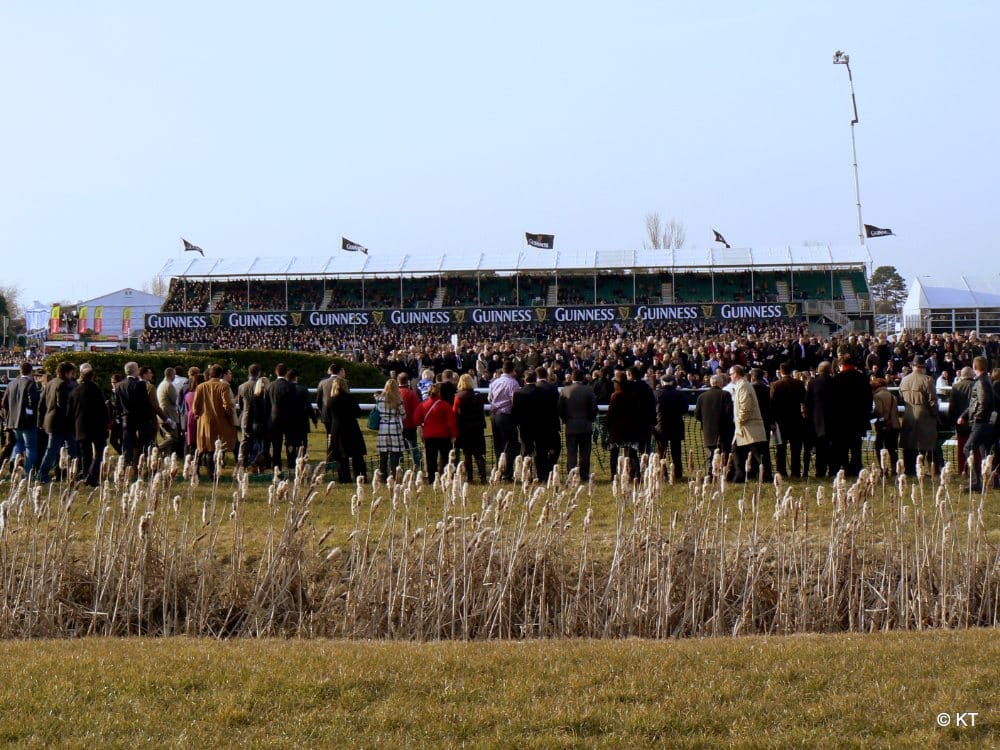
The value tier, opposite the grandstand with a straight-on view down the home straight many regulars rate as the best sightline on the course for a finish — at the cost of the Parade Ring and paddock access.
Prices move every year and shift within the week itself — Tuesday and Friday cost more across all three enclosures than the Wednesday/Thursday middle days — so always check current pricing directly on the Jockey Club’s own site rather than trusting a figure quoted elsewhere. Booking timelines matter more than price, though: Gold Cup Friday is consistently the hardest ticket of the week and can sell out months out, with opening Tuesday close behind; Wednesday and Thursday are traditionally more forgiving, and the Jockey Club has in recent years priced Wednesday lower specifically to spread demand. Hospitality packages and private boxes — Platinum Suites, Long Run Balcony Boxes, standalone restaurants including a Michel Roux Jr-overseen dining room overlooking the last two fences — sell out earliest of all, sometimes before general admission is even fully released.
Physically, the day catches out more first-timers than the racing does. Cheltenham in March is often muddy, both the walk in from outer car parks and from the station cross grass and uneven ground, and while there are cash points on course — at the Centaur entrance, in the Best Mate Enclosure and in the Hall of Fame, with extra machines brought in for the big meetings — the queues at them on Festival days are their own event, and on-course bookmakers are mostly cash-first, so sort money out beforehand. Security checks are standard at every gate; arrive earlier than feels necessary to clear them before the first race. There’s no enforced dress code — the Jockey Club’s own line is “dress for the weather” — but most racegoers go smart-casual or country-smart, and Wednesday’s Ladies’ Day is the exception in spirit, with a Style Awards competition and the week’s highest concentration of fascinators and tailored coats. The advice that holds regardless of the day: sturdy boots or block heels over anything that sinks into turf, and a proper coat — you’re outdoors for most of a six-and-a-half-hour day in changeable Cotswolds weather.
Staying Over
Cheltenham Festival is one of the hardest accommodation squeezes in UK sport — hoteliers report close to full occupancy across the town for the entire week, and pricing behaves more like a major festival or Grand Prix weekend than an ordinary race meeting. A Racing Post investigation into a recent Festival found some Cheltenham hotel rates well over ten times their typical rate for the same week outside Festival dates; separate reporting has put average booking-site uplifts in the region of 200–300% across the town, hitting budget chains hardest in percentage terms. Treat every specific figure as a snapshot of one year, not a fixed price — the town’s own tourism board is clear that pricing is demand-led and moves year to year.
How far ahead to book
Regulars treat “a year out” as the realistic rule for choice of hotel in Cheltenham itself — several Cotswolds properties report guests rebooking for the following year before they’ve even checked out. Three to six months is the honest floor for whatever’s left, usually at a premium. If you’ve left it later than that, pivot straight to the alternative bases below rather than continuing to search the town itself, and check short-let sites, which tend to fill later and surge less than hotel chains.
The racecourse’s own “commutable travel areas” guidance sets out a genuinely useful tier system. Closest in, at fifteen to thirty-five minutes’ drive, sit Tewkesbury, Gloucester, Broadway, Evesham, Cirencester and Bourton-on-the-Water — the classic Cotswolds-village-and-drive-in strategy, with Gloucester alone offering a ten-minute train hop as well. A step out, Worcester and its surrounding villages are actively marketed as a deliberate cost-avoidance base, twenty-five to forty minutes from the course. Bristol and Birmingham both sit around an hour away by train or road and are genuinely popular Festival bases in their own right, partly because both have their own airports for anyone flying in. Commuting daily from further out — even London, at around two hours each way with several early direct trains — is a real and well-supported strategy rather than a fallback: rail operators lay on thousands of extra seats specifically for this pattern. It’s honestly described as economical but tiring done four days running, which is why most people treat a long-distance commute as a one- or two-day add-on rather than the whole week’s plan.
For anyone happier under canvas, a camping and glamping trade has grown up around the course specifically for Festival week — sites within a couple of miles offering everything from glamping pods to full touring pitches, plus an on-course caravan and motorhome site. It’s a smaller, less pressured market than hotels, but the same rule applies: book early, and pack for cold, damp, changeable March weather rather than hoping for the best.
Betting On The Day
Betting in person splits into two entirely different systems that sit side by side. Around two hundred independent on-course bookmakers pitch up in the betting ring — concentrated in Tattersalls, the biggest and busiest enclosure — each posting their own price on a board, and the price you’re quoted when you strike the bet is what you’re paid, whatever happens to it afterwards. The Tote works differently: your stake joins a shared pool with every other bet on that race, and the pool is split among winning tickets once deductions are taken out — there’s no fixed price at all, and it can pay out disproportionately well when a well-backed favourite gets beaten.
Mobile connectivity is a genuine, well-documented weak point. Free course wifi is real but restricted to a handful of official betting partners — if your bookmaker isn’t one of them, the free network won’t reach their app, and you’re pushed onto mobile data at exactly the moment tens of thousands of people are trying to do the same thing. Mobile networks deploy temporary mast capacity specifically for Cheltenham to handle the surge, which tells you how real the problem is. The practical fallback: Tote SMS betting works without a data connection, and it’s worth not relying on a single app for anything time-sensitive — check a couple of bookmakers’ boards as backup, or simply bet in cash.
Placing a bet with an on-course bookmaker, if you’ve never done it
Walk the row and compare boards first — prices genuinely vary stand to stand. Approach the counter and state, in order: the race, the horse’s name, your stake, and the bet type (“£10 to win”, “£10 each-way”). The bookmaker repeats it back before taking your money — that verbal confirmation is the actual contract, so listen and correct anything wrong immediately. Most stands are cash-first, though contactless is increasingly accepted; credit cards aren’t. You’ll get a paper slip recording the horse, price, stake and pitch number — keep it safe, since you return to that same stand, not any bookmaker, to collect winnings.
Best Odds Guaranteed — paid at the bigger of the price you took or the official Starting Price — is offered by most major bookmakers during Festival week, though activation times and exclusions differ firm by firm. It explicitly excludes ante-post bets, Tote bets, in-running bets and enhanced markets almost everywhere, so it only really protects a standard fixed-odds win or each-way single struck before the race. On price itself: traditional Starting Price is compiled from on-course bookmakers’ boards at the off, while Betfair SP is worked out purely from exchange liquidity at the same moment — genuinely different calculations that regularly diverge, since the exchange carries no bookmaker margin. The gap tends to be widest on well-traded, mid-priced horses and narrowest on short-priced favourites.
The Aftermath: Where the Form Continues
This is the part most Festival guides skip entirely, and it’s the part that actually matters if you’re still betting once the four days are over. Racing Post and Timeform spend the weeks after the meeting re-marking horses’ figures — working out which runs are being franked by what comes next, and which need discounting outright.
The core caveat, repeated by analysts every year, is that Festival form runs hot in both directions. A horse can run above or below its true level because of the atmosphere, the unusually testing four-day championship schedule, and a finishing hill that exaggerates genuine stamina doubts. The plain-English version: horses that empty themselves on that final climb can come back flat next time, and novices who overperform in the cauldron of a first Festival can regress once the occasion itself stops doing some of the work. It’s the UK jumps equivalent of the American “bounce theory” — the idea that a career-best, high-effort performance tends to be followed by regression rather than an immediate repeat, especially on a quick turnaround. Timeform’s own in-running symbols make this concrete: a horse flagged as a technically flawed jumper who “wins under specific conditions” is a direct signal to discount that Cheltenham form going forward rather than read it as a horse improving.
Constitution Hill is the clearest recent illustration of why a Festival horse cannot be assumed to reproduce its form weeks later: after crashing out of the Champion Hurdle he failed to complete at Aintree the following month, ran well below form at Punchestown, then fell again in the autumn, and connections eventually ruled him out of jumping altogether. What that sequence does not establish is cause — his trainer was still describing the horse’s work as brilliant when the decision came, and framed it as not wanting to risk further falls. Read it as a warning against assuming ability carries the form forward, not as evidence that Cheltenham broke him.
On the positive side of the ledger, Cheltenham form at Aintree’s Grand National Festival three or four weeks later is the most closely studied forward-form angle in the sport. One detailed analysis of 3,009 horses that ran at both meetings between 1990 and 2020 found 54.2% improved their finishing position at Aintree, and for Cheltenham winners specifically the carry-over was stronger still — 67.5% finished in the first three back at Aintree and over 31% won again, a figure that rose to 33.7% through the 2010s. Read it for what it is: that study covers the whole Aintree meeting, the Mildmay and hurdle races included, not the Grand National itself. Its other finding is the caveat — non-completion ran at 18.8% at Aintree against 10.1% at Cheltenham, so a better expected finishing position should not be confused with the meeting being easier to complete.
The springboard
Corach Rambler won the Ultima Handicap Chase at the 2023 Festival, was cut to National favourite off the back of it, and duly won at Aintree three weeks later — trainer Lucinda Russell explicitly cited the Cheltenham form and a favourable weight as the reason for targeting it.
Both ways at once
Tiger Roll won the Cross Country Chase at Cheltenham and followed up in the National itself in both 2018 and 2019 — the first back-to-back winner since Red Rum. Two years later, off the same Cheltenham win, he was pulled up well beaten at Aintree: even the strongest springboard case isn’t automatic.
Not a prerequisite
Cheltenham form isn’t a requirement for National glory either — both Rule The World (2016) and I Am Maximus (2024) won the National with little or no standout Festival form behind them, the standard caveat against over-crediting the Cheltenham line.
Only Golden Miller, in 1934, has ever won the Gold Cup and the Grand National in the same season. L’Escargot won the Gold Cup twice before taking the National four years later, beating Red Rum. The lesson underneath all of it is the same one that runs through this whole guide: Cheltenham form is real information, but it’s information that needs weighing, not simply carried forward at face value — know whether a run was a horse showing genuine improvement, or a horse that simply emptied the tank on the way up the hill.
A Short History
The Festival’s roots run deeper than most realise. Its ancestor, the Grand National Hunt Meeting, was first run in 1860 and spent decades as a travelling fixture before Cheltenham settled it permanently at Prestbury Park from 1911 — the point that effectively marks the birth of “Cheltenham” as it’s understood today. It stayed a three-day meeting for most of the twentieth century, expanding to today’s four-day format only in 2005.
Few sporting events carry as dense a roll of legends. Golden Miller, trained for the formidable Dorothy Paget, won five consecutive Gold Cups between 1932 and 1936, and in 1934 pulled off the unique Gold Cup–Grand National double in the same season. Arkle, trained in Ireland by Tom Dreaper and ridden throughout by Pat Taaffe, won three straight Gold Cups from 1964, posting a Timeform rating still the highest ever recorded for a steeplechaser. Best Mate matched that three-in-a-row feat from 2002, and Kauto Star went one better in a different way — the only horse to ever lose the Gold Cup and then win it back, in 2009. Over hurdles, Istabraq won three consecutive Champion Hurdles from 1998 for Aidan O’Brien and Charlie Swan, and more recently Hurricane Fly won two Champion Hurdles for Willie Mullins and retired holding what was then the world-record number of Grade 1 wins.
That Irish presence in the story is no accident — it’s formalised today in the Prestbury Cup, named after the village next to the racecourse and awarded since 2014 to whichever nation trains more winners across the 28 races. Ireland has taken it in almost every year since. Cheltenham carries one of the richest prize funds of the entire jumps season, comfortably the biggest week (if not the single biggest race) in National Hunt racing, with the Gold Cup itself the most valuable prize of the week.
March in the Cotswolds is unpredictable enough that weather has periodically disrupted the meeting itself — frozen ground abandoned the 1931 Festival outright, rain and snow cost the 1937 Gold Cup, and 1978’s third day was lost to snow, with the Gold Cup rerun the following month. The Festival was cancelled entirely in 2001, for foot-and-mouth disease rather than weather. The practical upshot for anyone planning a trip hasn’t changed in a century: dress for cold and damp, whatever the forecast says a week out.
FAQ
Do I need to dress up?
What happens to my ante-post bet if my horse doesn’t run?
Can I bet with my phone on course?
Does Cheltenham Festival form carry over to Aintree?
Does it point to the Grand National specifically?
Which day should I go if I can only pick one?
How early should I arrive?
See the reasoning, not just the result
FormDial posts every bet before the off, with the full case behind it — win or lose, logged either way.