Royal Ascot
Five days, eight Group 1s, and the strictest dress code in British sport — the racing, the ante-post market, the enclosures, and where the form actually goes once the Royal Procession is over for another year.
No other week in the Flat calendar packs in eight Group 1 races, an unbroken royal ceremony dating to 1825, and a dress code strict enough to turn people away at the gate. Royal Ascot rewards reading closely — on the track and off it.
The Five Days, Race by Race
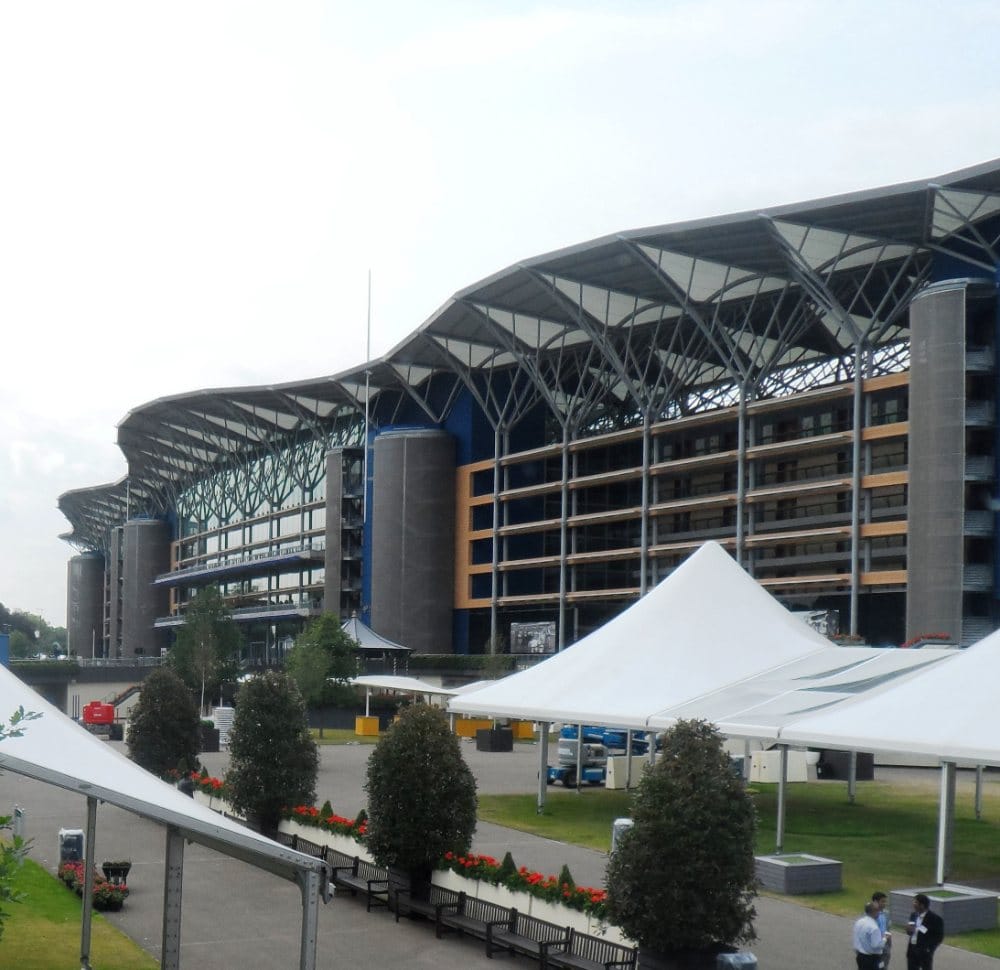
Royal Ascot runs Tuesday to Saturday every June. Gates open at 10.30am, the Royal Procession comes down the straight mile at 2.00pm — the monarch and senior royals travelling in open horse-drawn carriages pulled by Windsor Greys, a tradition dating to 1825 under George IV — and the first race goes off half an hour later. Seven races run every day, 35 across the week, including eight Group 1s.
Tuesday
Opening DayThree Group 1s: the Queen Anne Stakes (the traditional curtain-raiser, named after Ascot’s founder), the King Charles III Stakes (a 5-furlong sprint, known as the King’s Stand Stakes until the 2023 rename), and the St James’s Palace Stakes, the top mile race for three-year-old colts.
Wednesday
The Prince of Wales’s Stakes (1m2f, for the top middle-distance horses) is the Group 1 centrepiece, alongside the Queen Mary Stakes, Queen’s Vase and Duke of Cambridge Stakes.
Thursday
Ladies’ DayThe fashion day, and the week’s most historic race: the Ascot Gold Cup, run over a marathon 2m4f and contested since 1807. Not to be confused with the Cheltenham Gold Cup — this one’s Flat, not jumps.
Friday
Two Group 1s for the fillies and sprinters: the Coronation Stakes (a mile for three-year-old fillies) and the Commonwealth Cup (a 6-furlong sprint), plus the King Edward VII Stakes — sometimes called “the Derby of Ascot.”
Saturday
Closing DayCarries the Queen Elizabeth II Jubilee Stakes — a 6-furlong sprint that’s been renamed repeatedly with the times (Golden Jubilee in 2002, Diamond Jubilee in 2012, Platinum Jubilee in 2022, its current name adopted in 2023 after the Queen’s death), plus the big-field cavalry-charge Wokingham Stakes and the Queen Alexandra Stakes, Britain’s longest Flat race at 2m5f143y.
Ante-Post: The International Dimension
Royal Ascot is arguably the deepest ante-post market in British Flat racing, and the reason is scale: eight Group 1s that horses are deliberately trained toward for months, drawing serious challengers from well outside Britain and Ireland. For how ante-post betting works in general, see our Ante-Post Betting Explained guide.
Prices form the previous autumn on skeleton markets, then sharpen through a defined spring trial circuit: the Lockinge Stakes at Newbury for the Queen Anne, the Tattersalls Gold Cup and Irish Guineas Festival for the St James’s Palace and Coronation markets, the Yorkshire Cup and Sagaro Stakes for the Gold Cup, and the Duke of York and Temple Stakes for the sprints. A single trial can move a price by half or more.
What makes Royal Ascot genuinely different from a meeting like Cheltenham — whose ante-post market is essentially Ireland against Britain — is the international raiding party. Australian sprinters have long treated the King Charles III and Queen Elizabeth II Jubilee Stakes as prime targets, from Choisir’s double in 2003 through Black Caviar in 2012 to Asfoora in 2024; Japanese and Hong Kong-trained runners add further legs most years. That international travel creates a distinctive risk standard ante-post terms don’t fully cover: quarantine failures, travel setbacks and vet checks can end a campaign with no run and no recourse. Bookmakers typically switch major races to Non-Runner No Bet around the five-day declaration stage, which is when most disciplined backers actually strike: the price is usually still bigger than the eventual starting price, without carrying the full non-runner risk.
Group 1 form itself can reshape a market overnight. Frankel’s demolition of a Group 1 field at Newbury saw him sent off at 1/10 for the 2012 Queen Anne Stakes — among the shortest-priced favourites in the meeting’s history — and he duly won by 11 lengths. Aidan O’Brien’s Yeats (four straight Gold Cups, 2006–2009) and John Gosden’s Stradivarius (three straight, 2018–2020) both went off favourite in nearly every one of their wins, showing how fast the market consolidates around a proven stayer once trial form confirms it.
Reading the Track: Courses, Draw and the O’Brien Factor
Royal Ascot is run over two physically different tracks. Sprints and one-turn races (5f up to the straight mile) use the dead-straight Straight Course. Middle-distance and staying races use the Round Course, a right-handed triangular track that dips through Swinley Bottom before sweeping into the home straight — sharing the final three furlongs with the sprinters. That shared run-in climbs roughly 73 feet from its lowest point, steepest in the final two furlongs, exactly when horses are running on empty. It’s a finish that punishes anything that’s gone too soon.
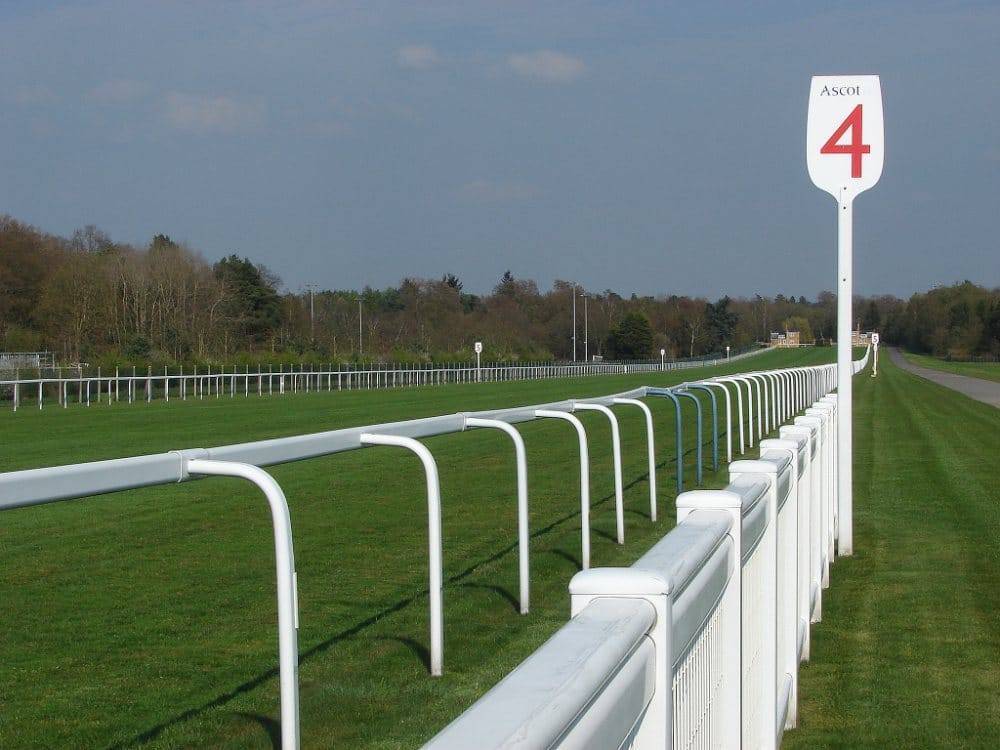
Draw bias is genuinely contested here, which is worth knowing before trusting a confident-sounding rule. The popular “Golden Highway” story says high, stands-side stalls dominate the straight course — and at the minimum trips there’s real evidence for it, with specific races showing their own patterns (recent Queen Mary Stakes winners have mostly avoided the lowest draws; Buckingham Palace and Britannia Stakes winners have skewed high). But dedicated draw-bias research on the straight mile itself finds the opposite in bigger fields: when the pack splits into distinct groups rather than bunching centrally, it’s actually low stalls that have done better historically — the reverse of the folklore. On the Round Course, low stalls have shown a real edge in the longer staying handicaps, for the simple reason that they can save ground through Swinley Bottom’s home turn. The honest read: draw at Ascot is mostly a proxy for pace, and which side wins depends on how a given renewal’s pace unfolds — treat it as a tendency to weigh, not a fixed rail advantage.
See our Ascot racecourse guide for the track outside Royal Ascot week too. Going matters just as much. Royal Ascot most often runs fast, and on quick ground at the minimum trips, pace-pressing speed is at a premium; stretch past seven furlongs and patient, held-up stayers increasingly take over, since the closing hill exposes anything that’s gone too early. Soften the ground and the profile shifts again toward out-and-out stamina.
The O’Brien factor
No trends piece on Royal Ascot is complete without Aidan O’Brien, whose Ballydoyle string has become the meeting’s defining statistical story. He has now won every Group 1 on the Royal Ascot programme at least once — from the pure speed of the Coventry Stakes to the out-and-out stamina test of the Gold Cup — and holds the record for both most career winners and most leading-trainer titles at the meeting. That breadth matters more than the raw count: it’s a structural depth-of-string advantage that plays across the straight-course speed division and the round-course staying division alike.
Enclosures and the Dress Code
Royal Ascot doesn’t have one crowd, it has four, sorted by a strict hierarchy of formality and, at the top, genuine exclusivity. Nowhere else in British sport does what you’re wearing determine which gate you can walk through.
Royal Enclosure
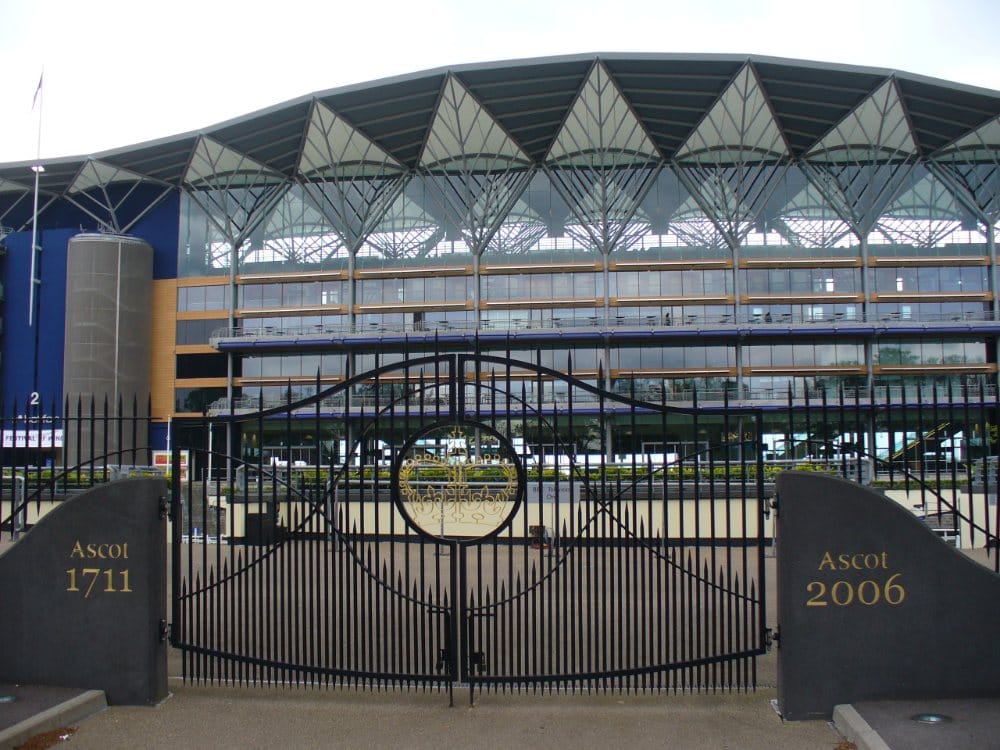
Not a ticket you buy but a membership you apply for — first-timers need sponsorship from existing members of several years’ standing, a system dating to 1807. Men: morning coat, waistcoat and tie, top hat. Women: a hat (or a fascinator with a solid base of at least 4 inches), skirts to the knee or longer, straps at least an inch wide, no bare midriff.
Queen Anne Enclosure
The most formal enclosure open to general public booking — no sponsorship required — and the only non-Royal enclosure with parade ring viewing. Hats or headpieces required, but meaningfully looser than the Royal Enclosure: no knee-length rule, and open-back styles are fine.
Village Enclosure
The newest enclosure, added in 2017 — the first in about a century. Festival-flavoured, with live music and a younger crowd, while still expecting a formal effort without the hard rules.
Windsor Enclosure
No enforced dress code at all — smart daywear is simply encouraged — and the only enclosure where picnics and your own bottle on the lawn are allowed. The value and family-friendly option.
Across every enclosure without exception: fancy dress, novelty prints, logos and slogans are banned, along with trainers, denim, leggings and shorts. Ascot is explicit that it makes no exceptions regardless of which badge someone holds — enforcement stories (a strap deemed too narrow, a top hat removed at the wrong moment) reliably make the papers every June. The code has loosened at the edges over time: Ascot’s Style Guide was only formally published in 2012, since when it’s allowed knee-length jumpsuits as a dress alternative, and from 2019 let racegoers choose whichever gender’s guidance they’re most comfortable following.
Thursday, Ladies’ Day, is consistently the fastest-selling day of the week for tickets and hospitality alike — book that one earliest if it’s the target.
Getting There
Ascot railway station sits just a 7-minute walk from the racecourse, with direct South Western Railway trains from London Waterloo (around 52 minutes) and a notably fast 27-minute run from Reading. Royal Ascot week sees frequency boosted to roughly every 15 minutes, though Ladies’ Day trains from Waterloo are known to fill to capacity by mid-morning — travel early that day specifically.
By road, the course sits between the A329 and A330, signposted from the M4, M3 and Windsor. A substantial temporary traffic order runs for the whole meeting, not just the busiest day: a 20mph limit across Ascot High Street, the A330 Winkfield Road closed to vehicles through the late-morning arrival window, and an evening one-way system to help clear departing traffic. Parking is on-course but pre-book only up to five days out, after which it switches to on-the-day cash sale — pre-booking is the sensible default.
Which day is worst
Thursday, Ladies’ Day, draws the biggest crowd of the week by some distance and is built around the Gold Cup. Tuesday (Opening Day) and Saturday are comparatively calmer.
By air, Heathrow is comfortably the closest airport at around 10 miles, a fraction of the distance to Gatwick or London City. By coach, National Express runs official packages combining the return fare with enclosure admission from around 15 UK locations.
Staying Over
Royal Ascot sits almost inside the London commuter belt, which changes the accommodation calculus compared with a festival like Cheltenham. Hotels within a short drive of the course fill months ahead, and Royal Enclosure and Queen Anne tickets themselves sell out weeks ahead for Thursday and Saturday specifically, pulling hotel demand forward with them. Prices spike sharply toward the weekend specifically — Saturday nights have been reported running several times higher than Friday’s rate in the same week — so book as early as you can rather than waiting to compare.
Windsor, about six miles out, is the standout alternative base — its own strong tourist pull means a much deeper hotel stock than Ascot village itself. Bracknell (a 10-minute drive) and Reading (around 13 miles, with its own strong rail links) are solid budget fallbacks once Windsor fills.
Commuting from London is a genuinely realistic strategy here, not just a fallback — Ascot is only 25–30 miles out, and a direct Waterloo train takes under an hour. A large share of Royal Ascot attendees simply day-trip in rather than pay the week’s hotel premium, though trains get seriously overcrowded on the busiest days and standing for part of the journey in full morning dress is a common complaint. There’s no on-site campsite, but a genuine cluster of options sits within a short drive, closest at around four miles out — book ahead here too, since the same demand pattern applies with more headroom.
Betting On The Day
Royal Ascot is unusual among British racecourses in that on-course betting is thriving rather than declining — around 220 independent bookmakers pitch up on the busiest days, concentrated in the Queen Anne Enclosure (the main public enclosure, with pitches described as full by mid-week) with a further cluster along the Windsor Enclosure’s home straight. The Royal Enclosure, by contrast, sticks mostly to the Tote and Ascot’s own in-house facilities rather than a full row of independent layers. For anyone not attending, ITV Racing covers all five days live, with radio commentary and bookmakers’ own account-holder streams covering the rest.
Placing a bet
Walk the row first — prices vary pitch to pitch. State your selection and stake clearly (“£10 win on number 3”), get your price confirmed, and keep the printed ticket safe: it’s your only proof, and you return to the same bookmaker to collect.
Best Odds Guaranteed
An online/account feature only — a fixed-odds pitch bet on-course is settled at the price taken, with no upgrade. Several major online firms offer it from 8am on Royal Ascot races, though scope varies by bookmaker and always excludes ante-post bets.
Signal and connectivity
Generally reliable, but roughly a quarter of a million people pass through across the week and networks can strain at peak moments. Place time-sensitive mobile bets with a comfortable buffer rather than relying on a signal in the final couple of minutes.
The crowd culture is worth flagging for anyone used to a jumps meeting: where Cheltenham runs on the rowdy, largely dress-code-free “Cheltenham Roar,” Royal Ascot’s Royal Enclosure dress code and smart-dress expectation even in the more relaxed enclosures gives the whole week a more corporate, first-timer-in-a-suit atmosphere — and with it, a much higher proportion of once-a-year recreational punters in the ring than the regulars-heavy crowd at a jumps meeting. Nobody should feel self-conscious asking a bookmaker to slow down or explain a price.
Ascot’s own accessibility team can advise on step-free routes, viewing platforms and parking for wheelchair users and other access needs across all four enclosures — provisions vary by enclosure, so it’s worth confirming directly with the racecourse ahead of the day rather than assuming. And with a crowd this heavy on once-a-year bettors: stake what you can afford to lose, and if it stops being fun, help is there — see our page on Responsible Gambling.
Where the Form Leads
For serious form students, Royal Ascot’s real value isn’t just who won — it’s what those results predict for the rest of the season, because so many of the year’s biggest Group 1s draw their fields straight from Ascot form.
The clearest link is the mile division. Of the last dozen or so Queen Anne Stakes winners, roughly seven went on to the Sussex Stakes at Glorious Goodwood next time out, with a couple among them winning it — Frankel himself completed the exact double in 2011. Placed form travels too: a competitive defeat in the Ascot Group 1s is often read as a stronger forward signal than an easy, low-class win somewhere else. The fillies’ division has its own well-worn route, from the Coronation Stakes at Ascot to the Nassau Stakes at Goodwood — Nashwa and Fancy Blue both completed that double in their own seasons.
Stepping up in trip is where Ascot form gets stress-tested, and the Juddmonte International at York in August is the classic destination for a mile-and-a-quarter Group 1 winner expected to progress. Frankel is the textbook case: after his 11-length Queen Anne demolition, he stepped up to ten furlongs for the first time and won the Juddmonte by seven, extending an unbeaten run to eight Group 1s. Baaeed repeated the trick a decade later, winning the Juddmonte by six and a half lengths in what was rated the best performance in the race since Frankel. At the stamina end, the Gold Cup is explicitly designed to be read forward into the Stayers’ Triple Crown (Gold Cup, Goodwood Cup, Doncaster Cup) — Stradivarius completed the full sweep in 2019, and it’s the standard reference point analysts reach for whenever a new Gold Cup winner looks capable of attempting the same sequence.
Reading it both ways
Regression matters just as much as the positive translations. Auguste Rodin arrived at his 2024 Prince of Wales’s Stakes off a well-below-form run in Dubai, produced the best rating of his career to win at Ascot and top the global rankings — then never won again all year, finishing well beaten in his final start before retiring. Professional analysts use it as the standard caution against assuming a career-best Ascot performance is a new baseline rather than a peak.
International raiders are treated as a genuinely separate, harder category. Overseas form doesn’t line up cleanly against the home form book: Australian sprint and mile raiders and Japanese middle-distance raiders are judged on quite different credibility curves by British analysts, and a raider’s Ascot form isn’t assumed to travel back out just as readily either. And the clean same-season route from Ascot to the Arc is rarer than fans assume: Alpinista didn’t run at Royal Ascot at all in her Arc-winning year, taking a different trial route entirely — proof that the best path to the biggest prize doesn’t always run through Ascot, even for a genuine stayer.
History and Royal Prestige
Few sporting fixtures anywhere carry the weight of unbroken royal patronage that Royal Ascot does. Queen Anne, out riding from Windsor Castle in 1711, came across an expanse of open heath she judged “ideal for horses to gallop at full stretch,” had the course laid out on Crown land, and the first meeting ran that August. The royal thread has never broken since — the course still sits on Crown Estate land six miles from Windsor Castle, the meeting formally became a “Royal” week in 1911, and the Royal Procession described above has run since 1825.
The royals have been participants as much as patrons. Queen Elizabeth II attended every Royal Ascot from her 1953 coronation to 2021, racing in her own purple and gold silks, and saddled two dozen winners at the meeting across almost seven decades. The high point came in 2013, when her filly Estimate won the Gold Cup itself — the first time in the race’s long history it had been won by a reigning monarch.
The Gold Cup is the meeting’s historic centrepiece, first run in 1807 in front of King George III and Queen Charlotte — one of the oldest continuously run horse races in the world. Aidan O’Brien’s Yeats won it four years running (2006–2009); Lester Piggott rode a record 11 Gold Cup winners between 1957 and 1982. The single most-cited performance in the meeting’s modern history came in 2012, when Frankel’s Queen Anne Stakes win earned among the highest Timeform ratings ever recorded, in the same week Black Caviar won the Diamond Jubilee Stakes (now the Queen Elizabeth II Jubilee Stakes) unbeaten in her 22nd race.
In scale, Royal Ascot sits at or near the top of the British Flat calendar — its total prize fund runs comfortably ahead of Glorious Goodwood’s roughly £5.8m and York’s Ebor Festival’s roughly £6.85m, spread across eight Group 1s including two races worth £1 million each. What separates Royal Ascot from its rivals isn’t the prize money or the crowd on its own — it’s having all three factors stack in the same week: eight Group 1s, ceremony dating to 1825, and a social occasion with genuine global reach.
FAQ
Can I just turn up and get into the Royal Enclosure?
What happens if my outfit doesn’t meet the dress code?
Is the Ascot Gold Cup the same as the Cheltenham Gold Cup?
Which day should I go if I can only pick one?
Does Royal Ascot form actually predict the rest of the season?
See the reasoning, not just the result
FormDial posts every bet before the off, with the full case behind it — win or lose, logged either way.