The Grand National
Three days at Aintree, the biggest betting event of the British sporting year, and a race whose fences, weights and safety record are as much a part of the story as the finish line.
No other jumps race carries a betting audience like this one — the one race where the story of the fences and the safety reforms matters just as much as the story of the odds.
The Three Days at Aintree
The Randox Grand National Festival runs Thursday to Saturday in early April — the 2027 renewal is confirmed for 8–10 April. Each day carries a full seven-race card in its own right; the National itself is the sixth race on the Saturday, not the whole day.
Thursday
Opening DayFour Grade 1 contests plus a handicap chase and an NH Flat race. The Foxhunters’ Chase is run today over the actual Grand National fences — a rare chance to see amateur riders and veteran chasers tackle Becher’s and the Chair. The cheapest, calmest and easiest-to-book day of the three.
Friday
Ladies’ DayThe fashion day, built around a Style Awards competition, but with real racing behind it: the Melling Chase (Grade 1) and the Topham Handicap Chase, also run over National fences. Bigger crowds than Thursday, and priced accordingly.
Saturday
Grand National DayBy far the biggest crowd of the week — around 70,000 on-course. A full card either side of the main event: a Grade 1 novices’ chase and hurdle, two premier handicaps, then the Grand National itself (4m2½f) around 4:00pm, closing with an NH Flat race.
The Course, the Fences, and the Safety Story
The National is run over 4 miles 2½ furlongs and 30 fences across two circuits — nearly double the obstacles of a normal steeplechase and about twice the distance of a Cheltenham chase. There are 16 unique fences; 14 are jumped on both circuits, while The Chair and the Water Jump, close to the home turn, are jumped only once. After the last fence, horses face a 494-yard run to the line — the longest run-in in British racing, and the reason so many Nationals are decided by inches after four and a quarter exhausting miles.
Becher’s Brook
The most famous fence in jump racing: an ordinary-looking birch fence hiding a steep drop on landing, historically around 6ft 9in from hedge-top to brook — built up and levelled significantly since through successive safety reforms. Named for Captain Martin Becher, who fell there and sheltered in the brook itself during the first official running in 1839.
The Canal Turn
Jumped at speed straight into a sharp 90-degree left turn, named for the adjacent Leeds–Liverpool Canal. Horses jumped at the wrong angle get carried wide and lose vital ground — a genuine tactical fence, not just a jumping test.
The Chair
The tallest fence on the course at around 1.57m, with a wide ditch on takeoff, named after the chair where a distance judge once sat during 19th-century heat racing. Jumped only once, early in the race.
Foinavon’s Fence
Otherwise the smallest, least remarkable fence on the course — until a 1967 pile-up blocked it entirely and 100/1 outsider Foinavon, well behind the chaos, was the only horse able to pick a way through. Officially renamed in 1984.
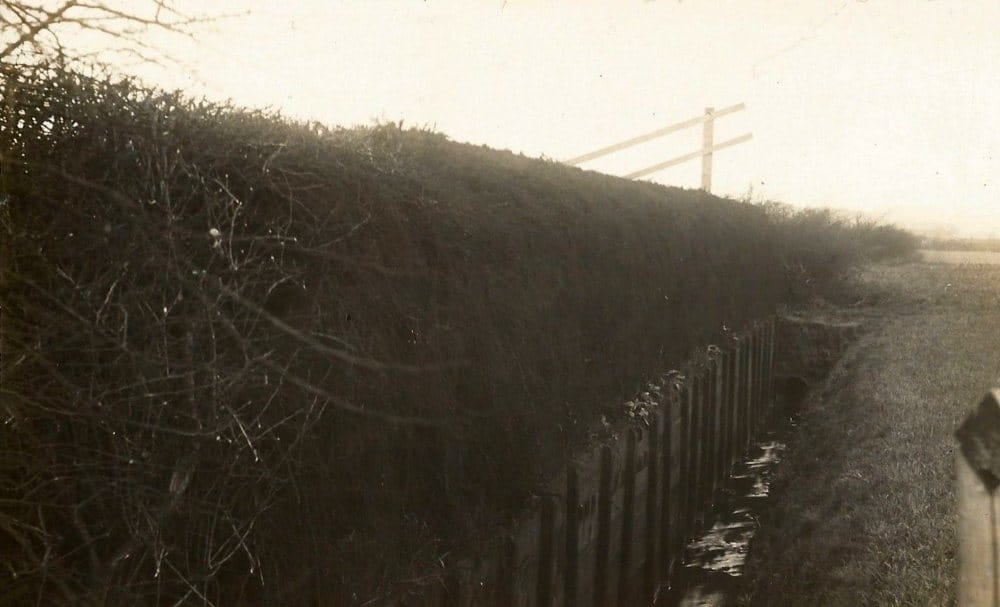
Field size has always been managed for safety. The largest field ever assembled was 66 runners in 1929 — a chaotic race with only 10 finishers, won by 100/1 shot Gregalach. The limit sat at 40 for decades, then, following a British Horseracing Authority safety review after the fatal fall of Hill Sixteen in 2023, Aintree cut the maximum to 34 runners from 2024 — the first reduction since 1984 — alongside moving the first fence 60 yards closer to the start to calm the opening charge, and lowering fence 11.
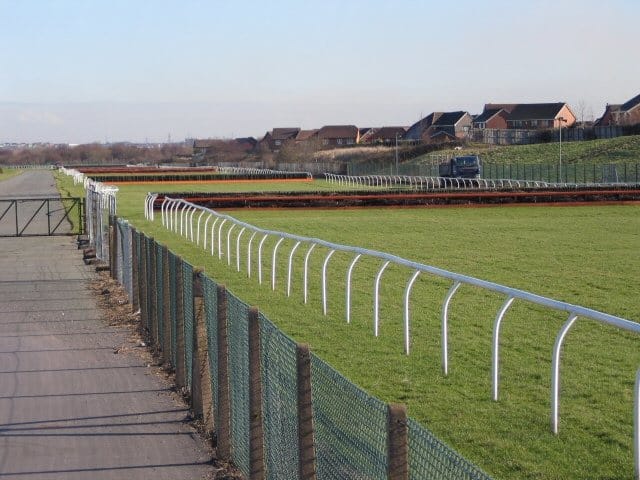
Outside Festival week, Aintree hosts racing on the same fences and course all year — see our Aintree racecourse guide for the shape and biases that apply on an ordinary card. That 2024 change is the latest step in a reform programme stretching back over a decade. In 2013, following a run of fatalities, the rigid timber cores inside the fences were replaced with a flexible plastic “imitation birch” core topped with real spruce — a far more forgiving obstacle to brush through if a horse meets it wrong — alongside taller toe-boards and levelled landings. The race also moved to a standing start in 2013, ending the old walk-in-and-recall system blamed for chaotic false starts, most notoriously the void 1993 National, when a tangled tape and a recall flag that failed to unfurl sent 30 of 39 runners off unofficially.
The safety debate, honestly
The reforms above are well documented and not seriously disputed. What remains genuinely contested is whether they’ve done enough: welfare organisations continue to campaign for further change, and even the basic “deaths since 2000” figure is reported differently depending on what’s being counted — the National race itself, every race run over the National fences, or the whole three-day meeting. Two horses died at the wider 2026 Aintree Festival, though not in the National itself, and campaigners cited it as evidence reform hasn’t gone far enough. We’re not going to pretend that debate is settled, or pick a side on a disputed number — only flag that it exists, because pretending it doesn’t would be its own kind of dishonesty.
Reading the Form: Age, Weight, Trainers and Going
The old cliche — “just survive it” — undersells how much the modern National rewards genuine, gradable form, and the profile has shifted meaningfully since the 2013 reforms.
Age is the single most reliable filter. Ten of the last eleven winners were seven to nine years old, and horses under ten have won every renewal for a decade. Weight has broken from its old pattern entirely: for decades the National belonged to classy handicappers dropped in the weights, but since Hedgehunter breached the 11-stone mark in 2005, a run of winners — Tiger Roll, Nick Rockett, I Am Maximus twice — have carried 11st or more, and official ratings have climbed with them: nine of the last eleven winners were rated 146–160. The “must be feather-light” logic of the 1990s and 2000s is largely obsolete, though a ceiling still exists — top-weights above 11st 10lb still have a poor record.
Irish yards now dominate training honours — seven of the last nine renewals have gone to Irish-trained horses, with Willie Mullins and Gordon Elliott the two powerhouse names of the modern era, and Lucinda Russell the leading British-based specialist. On jockeys, the data cuts against a simple “experience wins it” story: course experience helps at the margin, but several riders with a long book of unsuccessful National rides have never landed it, while Sam Waley-Cohen won on his final ever ride in 2022 with no prior National win behind him. Tactical placement over the unique obstacles matters more than sheer weight of rides.
Pace and going interact with the fences directly. The long-run numbers still favour prominent racing — the Canal Turn in particular rewards a horse handy enough to jump it from the outside and cut across, rather than get buried wide in traffic — though the picture has softened since 2013’s fence-core change, with more winners coming from off the pace than in the old timber-fence era. Soft or heavy ground turns the race into more of a pure stamina and jumping-technique test — the fence-softening covered above means a tired horse is more likely to survive a mistake than in the old rigid-timber era — while good ground, the surface for the last three renewals, has let pace and class matter more and produced a run of clearer-cut winners.
Betting Strategy: Filtering 34 Runners Down to a Shortlist
Thirty-four runners is too many to assess individually in the time most people spend on the National, so the trends above are best used as a filter, not a final answer. Start by ruling out horses outside the seven-to-nine age band and anything down near the bottom of the weights — the modern race no longer belongs to featherweight handicappers the way it did a generation ago. Irish yards, and Mullins and Elliott in particular, have won more than their share of recent renewals, which is worth weighting toward but not treating as automatic — plenty of well-weighted Irish-trained horses still don’t win. Use the fence and pace profile above as a tie-breaker between similarly-rated survivors of that first cut, not a starting point.
Each-way over win
With 34 runners and place terms often stretched to six or seven places, spreading smaller stakes each-way across two or three shortlisted horses usually beats a single win bet on the market leader — especially given no favourite has won at odds shorter than 11/4 in over a century.
Price discipline
The National draws money from people who bet once a year, and prices move on sentiment as much as form in the final weeks. Don’t chase a price after it’s already shortened past the point you judged it fair value.
Bank discipline
Decide a total stake for the day before the field is finalised, split it between any ante-post cover already taken and the final field, and stop there — this is one race, not a system to chase across the card.
None of this replaces reading the actual declarations closer to the day — final ground, market moves and late scratchings all still matter. But a shortlist built from age, weight and stable form, backed each-way rather than to win, is a more disciplined starting point than picking a name from the racecard on the day. For the mechanics behind each-way cover, see our Each-Way Betting guide.
Ante-Post: Betting Before the Weights Are Even Out
Ante-post betting on the National is a different game to backing a horse for a championship race like the Cheltenham Gold Cup, and the reason is one word: handicap. For how ante-post betting works in general — the trade-off between bigger prices and a lost stake if your horse doesn’t run — see our Ante-Post Betting Explained guide. What follows is specific to the National.
The Gold Cup is weight-for-age — every horse carries essentially the same weight, and the market moves mainly on form and fitness. The National is the opposite: a handicap capped at 34 runners, with every horse’s weight set specifically to even the field up, from a top weight of 11st 12lb down to as little as 10st 2lb. Those weights are published by the BHA’s handicapper every February, off an initial entry list of around 80 horses — so ante-post punters aren’t just pricing whether a horse will run well, they’re pricing a number the handicapper hasn’t even released yet when the earliest prices go up. From that initial 80, the field narrows through a confirmation stage in late March and final declarations three days out, down to 34 runners plus four reserves — meaning a large share of horses live in the ante-post market in February never reach the start at all.
That volatility is exactly why Non-Runner No Bet matters more here than for almost any other ante-post market: back without it, and the high probability of your horse never lining up leaves you with a dead stake and no run for your money. Bookmakers typically switch NRNB terms on two to four weeks before the race. The National’s each-way terms are also a distinctive piece of marketing built entirely around the size of the field — several firms have paid 6 or 7 places each-way in recent renewals, well beyond the standard 1/4-odds, 4-place terms you’d expect on an ordinary big-field handicap, precisely because so many casual punters are backing 20/1-plus outsiders with little realistic winning chance but a decent each-way shout.
The biggest ante-post moves tend to come from three places: weight relief once the field is confirmed and a horse’s effective mark looks better in a smaller field than it did in February; a sharpening trial run (the Becher Chase, the Irish or Scottish Grand Nationals); or confirmation of a big-name jockey booking, which the market reads as a strong signal of stable intent. The scale these moves can reach isn’t new — in 1986, owner Terry Ramsden staked, in his own words, “half a million quid each way” on Mr Snugfit, who obliged with fourth.
Getting There
Aintree sits on the A59 in north Liverpool, well connected by motorway — but the overwhelming advice from every official source is: don’t drive if you can possibly avoid it.
By train. Aintree station sits directly opposite the racecourse, under a five-minute walk to the gates, on the Merseyrail Northern Line. Across all three festival days, Merseyrail boosts frequency to a train every 7½ minutes between Liverpool city centre and Aintree in two windows — roughly 11am–2pm heading in, and 4:30–8:30pm heading out — though fitting those extra services in means reduced or rerouted trains on the Ormskirk, Southport and Headbolt Lane branches during the same windows, so check before you travel if you’re coming from one of those lines.
By road. The immediate area around the course closes hard during the meeting: Melling Road shuts completely for several days either side of the racing, and both the A59 Ormskirk Road and Park Lane close for several hours after racing each day, with signed diversions in place. Parking is pre-book only — there is no gate sale, and no official park-and-ride scheme currently runs for the meeting; third-party sites list pre-bookable private driveways nearby as the main alternative.
Which day is worst
Saturday, Grand National Day, is unambiguously the peak (see the numbers above). Friday’s Ladies Day is the second-busiest and has set attendance records in its own right in recent years, so don’t treat it as a quiet alternative. Thursday, Opening Day, is comfortably the calmest of the three.
By air. Liverpool John Lennon Airport is the nearest, with Manchester Airport a roughly 45-minute fallback. By coach, National Express runs dedicated Grand National Day services from cities including Birmingham, Manchester, Nottingham and Sheffield, dropping directly at the racecourse.
Tickets, Enclosures and the Day Itself
Grand National Day sells out first and fastest of the three days by a wide margin, followed by Ladies Day, with Thursday’s Opening Day the easiest and cheapest ticket. Enclosure names at Aintree shift year to year more than at most courses — always check the current official list rather than an older guide — but broadly range from General Admission through mid-tier seated stands to premium roof and box packages with parade-ring views. The Steeplechase Enclosure, across the Melling Road, is worth knowing about specifically: it has its own catering and betting, prime views of the first National fences, and one of the longest bars in Europe.
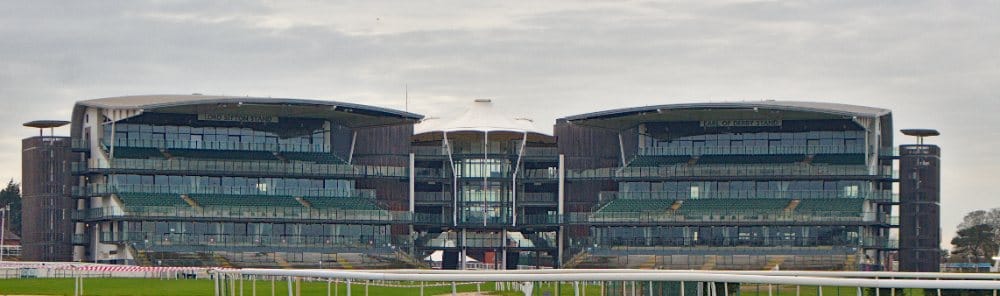
There’s no enforced dress code — Aintree’s own line is “dress to feel your best” — but fancy dress is banned and sportswear is discouraged, especially in premium enclosures. Security is thorough: expect bag searches and a small-bags-only policy with no left-luggage on site, so arrive earlier than feels necessary and travel light. April weather at Aintree is genuinely unpredictable — sun, wind and rain in the same afternoon is common — so treat the forecast as a rough guide, not a packing list.
Staying Over
Accommodation around Grand National week behaves nothing like a normal Liverpool weekend. One detailed analysis of over a thousand Aintree-area listings found a four-night stay during Festival week averaging £1,208 on Booking.com and £1,091 on Airbnb — roughly two and a half times the rate for the same nights either side of the meeting. Treat that as a snapshot of one specific year’s data, not a fixed multiplier, but the direction is consistent every year: book as early as you can, ideally months ahead for anywhere near the course or in the city centre.
Two areas dominate. Liverpool city centre — Hope Street, the Albert Dock waterfront, the main hotel strip — gives you nightlife and easy transport, around 15–20 minutes from the course. The immediate Aintree/Orrell Park area suits anyone who wants to walk in and skip the transport crowds entirely, at the cost of being away from the city’s evening entertainment.
Commuting in from further out is a genuine, well-used strategy for beating the worst of the price surge, not just a fallback. Manchester and Chester both connect into Liverpool inside an hour, with the same Merseyrail leg into Aintree from there — but rail operators are explicit that trains into Liverpool sell out early for National weekend, so this only stays realistic if booked well ahead. On-site camping isn’t really a feature of this meeting; the realistic alternative is established campsites a few miles out, none of which are set up specifically for race-day crowds or transport.
Betting On The Day: Sweepstakes, Pools and the Ring
The National is the one race a year when non-bettors bet. Around 12 million people in the UK have a wager on it annually, and roughly three in ten of them are first-timers or people returning after a long gap — a scale of casual participation no other race in Britain comes close to. Around 82% of all bets on the National are £5 or less: small, fun, once-a-year money, not serious staking. Around 5 million watch live on ITV, which has held the UK broadcast rights since 2017 (the BBC before 2012, then Channel 4); radio commentary and bookmakers’ own live streams for account holders cover anyone not in front of a television or at the course itself.
The office sweepstake is the race’s signature ritual, and bookmakers have leaned into it rather than fought it — nearly every major racing site now publishes a free sweepstake kit, using the favour as a soft way to convert casual sweepstake-takers into same-day account sign-ups. The Tote’s Placepot — picking a placed horse in each of the first six races — suits the same audience for the same reason: it only needs a top finish rather than a winner, from as little as 10p a line, and National Saturday’s pool is routinely one of the biggest of the entire year.
Each-way terms
Standard practice for a big-field handicap is 1/4 odds, 4 places. The National’s field size pushes bookmakers well past that floor — several major firms have paid 6 or 7 places each-way in recent renewals, because more places matters more to the mass-market punter than a bigger fraction.
Best Odds Guaranteed
Widely offered from race morning, paying the better of the price taken or the eventual starting price — valuable here because the National’s huge, competitive field produces real drift between morning prices and the off. It excludes ante-post bets, and not every major bookmaker offers it at all.
On-course
Tattersalls is the main enclosure for on-course bookmakers. Cash remains the most reliable way to bet in the ring — card acceptance is patchy on both bookmaker pitches and Tote terminals — and queues peak sharply in the hour before the off, so bet early if you can.
One statistic sums up the National’s reputation as racing’s great leveller: no favourite has won at odds shorter than 11/4 in over a century, and the race has produced multiple 100/1 winners across its history — which is precisely why so many people are happy to pick a name from a hat rather than study the form.
Given how many people bet just this once a year, it’s worth saying plainly: stake what you can afford to lose, and if it stops being fun, help is there — see our page on Responsible Gambling.
The Aftermath: What Happens to Grand National Horses
Most National coverage stops at the finish line. The more interesting question for anyone still betting once the race is run is what happens next — and the honest answer is more varied than a single headline outcome.
The National is won and completed by horses at the tail end of long careers, often carrying big weights at nine, ten or eleven years old, over the most searching test in jump racing. Corach Rambler, the 2023 winner, is a good illustration of how unpredictable that aftermath can be, even within one horse’s own story: connections gave him a long break, he reappeared that autumn and ran a full season including a Cheltenham Gold Cup third, then went back to defend his National title in 2024 as third favourite — only to unseat his jockey at the first fence, follow it with a laboured, pulled-up effort at Punchestown, and retire that May at the age of ten. Noble Yeats, the 2022 winner, took yet another path — racing on for two more seasons before arthritis ended his career in 2024 — and then died suddenly during retirement two years later, a reminder that even a National hero’s second act can be short.
Winning it more than once is genuinely rare, which is itself a useful data point when weighing a repeat runner’s chance: only Red Rum, Tiger Roll (back-to-back in 2018 and 2019) and, most recently, I Am Maximus (2024 and 2026) have managed it in the modern era, out of many thousands of attempts across the race’s history. That rarity reflects how much luck, as well as class, is required to get round safely twice. Running it more than once without winning is far more common — Iroko was fourth in 2025 and runner-up in 2026, the more typical repeat-runner outcome — which is exactly why a repeat attempt is usually backed for a place rather than expected to go one better. The last two renewals showed the same shape twice over: I Am Maximus was runner-up in 2025 before winning again in 2026, and Iroko’s own fourth-to-second progression follows the identical curve. Two years isn’t a trend on its own, but a horse that ran well without winning last time is a genuinely useful thread to carry into the shortlist above, alongside the age, weight and trainer filters. Beyond racing, second careers are well documented through Retraining of Racehorses, the sport’s own welfare charity, which parades ex-runners at Aintree and Cheltenham each year — some, like Pineau de Re, have gone on to eventing and showing; others move into breeding. Whether a hard National run itself predicts anything about a horse’s very next start is the least well-evidenced part of this picture — there’s no standardised public dataset tracking it — but the working assumption among trainers is telling in itself: a National run is treated as season-ending by default, and a fast reappearance within weeks is the exception worth noting, not the rule.
History and Legends
The official record books date the first Grand National to 1839, won by Lottery under Jem Mason. Racing historians have made a genuine case that the race actually began three years earlier — a horse called The Duke won in 1836 and 1837, and Sir William in 1838 — and that newspapers of the day treated those runnings as legitimate Grand Nationals right up until the 1860s, before the record books settled on 1839 as the official start. It’s widely said to be the most-watched horse race in the world, commonly cited at 500–600 million viewers in well over a hundred countries — a figure that’s repeated everywhere but traces back to older event-organiser estimates rather than any independently audited count, so it’s best read as reputation rather than a precise number.
Aintree’s other Grand Prix
The same course once hosted Formula One. A motor-racing circuit built around the racecourse in 1954 held the British Grand Prix five times — 1955, 1957, 1959, 1961 and 1962 — sharing the same grandstands as the horse racing. Stirling Moss won there in 1955, his first British Grand Prix victory; two years later he and Tony Brooks became the first British drivers to win the race in a British car, the Vanwall. Jim Clark’s 1962 win, leading every lap in a Lotus 25, was the circuit’s last Grand Prix before the race settled into rotating between Silverstone and Brands Hatch.
Red Rum is the race’s defining legend: the only horse to win it three times (1973, 1974, 1977), with two second-place finishes either side of that run — five placed efforts in a row against Aintree’s fences is a record of consistency nothing else comes close to. More recently, 2021 produced a different kind of landmark: Rachael Blackmore became the first female jockey to win the race, riding Minella Times for trainer Henry de Bromhead. Aldaniti and Bob Champion’s 1981 win is the race’s great human story: jockey Bob Champion had been diagnosed with cancer that had spread to his lungs less than two years earlier, given roughly a 40% survival chance, while his horse had nearly been put down after a severe injury of his own — both recovered, and won together. The charity founded from that story has since raised over £15 million and helped push testicular cancer survival rates from around 40% then to over 95% today.
Foinavon’s 100/1 win through a 1967 pile-up, the void 1993 race (covered above, and still the only Grand National never to produce a winner), and the 1997 IRA bomb scare that forced the evacuation of 60,000 people and pushed the race back two days, are the meeting’s three most disruptive chapters. On prize money: the National’s roughly £1 million total purse, split across the first ten finishers, makes it the richest jumps race in Europe by total fund — though because that money is spread so widely, the winner’s own share is actually smaller than the Cheltenham Gold Cup’s.
FAQ
Why is the National a handicap when Cheltenham’s big races aren’t?
Has the National actually got safer?
What happens to my ante-post bet if my horse doesn’t get in the final field?
How do I run a fair office sweepstake?
Which day should I go if I can only pick one?
See the reasoning, not just the result
FormDial posts every bet before the off, with the full case behind it — win or lose, logged either way.