King George VI Chase
Britain’s mid-winter chase championship, run every Boxing Day at Kempton — the ante-post market that really wakes up in November, a flat, fast track that’s found out as many Gold Cup hopes as it’s created, and a trial with a high hit-rate for naming contenders but a poor one for naming winners.
No other race in British jump racing sits inside a national holiday quite like this one. The King George VI Chase runs every Boxing Day at Kempton Park, and for one afternoon it turns racing into a mainstream, whole-family TV event — while quietly setting the agenda for the following March’s Cheltenham Gold Cup.
A Single Afternoon, Six Races
Unlike Cheltenham, Aintree, Royal Ascot or Glorious Goodwood, this isn’t a multi-day festival — the King George VI Chase is the showpiece of one dense, high-quality card at Kempton Park. Below is the running order from the most recently completed renewal, 26 December 2025, which sets the annual template:
The 2025 King George VI Chase itself produced one of the closest finishes in the race’s history: The Jukebox Man (7/1, trainer Ben Pauling, jockey Ben Jones, owned by former football manager Harry Redknapp) got up in the final strides to win by a nose from defending champion Banbridge (16/1, Joseph O’Brien), with Gaelic Warrior (9/4 joint-favourite, Willie Mullins/Paul Townend) a short head back in third and Jango Baie (9/4 joint-favourite, Nicky Henderson) a further half-length away in fourth — four horses jumped the last with a winning chance. The winning time, 5 minutes 49.13 seconds, was a new course record. Going was Good; total prize money was £242,575, with £142,375 to the winner. It was Ben Pauling’s first King George as a trainer.
Ante-Post: The Autumn Trial Chain
For how ante-post betting works in general, see our Ante-Post Betting Explained guide. The King George’s own ante-post market is slow to wake up. Books nominally price a “future” from soon after the previous running, but it sits thinly traded for months — the real market forms in October and November, once contenders start reappearing. The Charlie Hall Chase at Wetherby (late October/early November) is the first proper form line: three of its five winners from 2020-24 went on to run in the King George, and Bravemansgame completed the Charlie Hall-King George double in 2022. The John Durkan Memorial at Punchestown (late November) is a specific, non-obvious feeder for the leading Irish-trained chasers, often used as a seasonal reappearance run rather than a trial in its own right.
But the single biggest lever, by far, is the Betfair Chase at Haydock in late November — prices shorten hard once it’s run. Since its 2005 inception the Betfair Chase’s winners (Kauto Star four times, Silviniaco Conti, Cue Card, Bristol De Mai, A Plus Tard) map closely onto King George winners and market leaders in the same seasons. Part of why serious money follows the Betfair Chase winner specifically: it’s the first leg of the informal Stayers’ Chase Triple Crown (Betfair Chase → King George → Cheltenham Gold Cup), which carries a historic bonus of around £1 million on top of race purses. Only one horse has ever completed it — Kauto Star, in the 2006/07 season — which is exactly why the live possibility of it is itself a market-mover every autumn.
“Withdrawn” and “non-runner” are not the same thing
This distinction is poorly explained by most competitor guides. A horse taken out before final declarations is “withdrawn” — an ante-post bet on it is settled as a loser, stake kept by the bookmaker, unless a Non-Runner No Bet promotion was specifically in force. Only after final declarations (usually 24-48 hours before the off) does a withdrawal become a “non-runner,” triggering a standard refund. Firms typically don’t switch King George markets to NRNB until around the Betfair Chase at the earliest — meaning the longest, most attractive early-season prices are often exactly the ones with no such protection.
2025 is a good lesson in how wrong the on-the-day market can look even when it’s rational. Gaelic Warrior and Jango Baie went off short co-favourites, while the actual winner, The Jukebox Man, drifted out to around 13/2, and defending champion Banbridge — who then ran the race of his life into second — was a largely forgotten 14-16/1 shot. The result immediately reshaped the next market: The Jukebox Man was cut from 25/1 to 10/1 for the following March’s Gold Cup within the hour, and Banbridge moved from 33/1 to 20/1.
A betting exchange gives ante-post backers a tool fixed-odds bookmakers don’t: the ability to lay off some or all of an early position before declarations, banking a profit or capping a loss regardless of whether the horse ultimately runs. Given how thin NRNB protection is on the earliest, most attractive King George prices, that’s a genuinely different way of managing the exposure — not just an alternative venue for the same bet.
Reading the Track: Fast, Flat and Deceptively Testing
Kempton’s jumps course is built on almost the opposite template to Cheltenham’s or Aintree’s, and that contrast is exactly what makes the King George such a distinct examination. It’s a right-handed, flat, triangular circuit of roughly 1m5f, with nine fences per circuit (three in the home straight) and a 220-yard run-in — the King George’s 3 miles covers two circuits, hence 18 fences in total. That’s a shorter run-in than the course’s older configuration (ten fences, a 350-yard run-in), changed some years back alongside the construction of Kempton’s separate Polytrack all-weather circuit inside the same footprint.
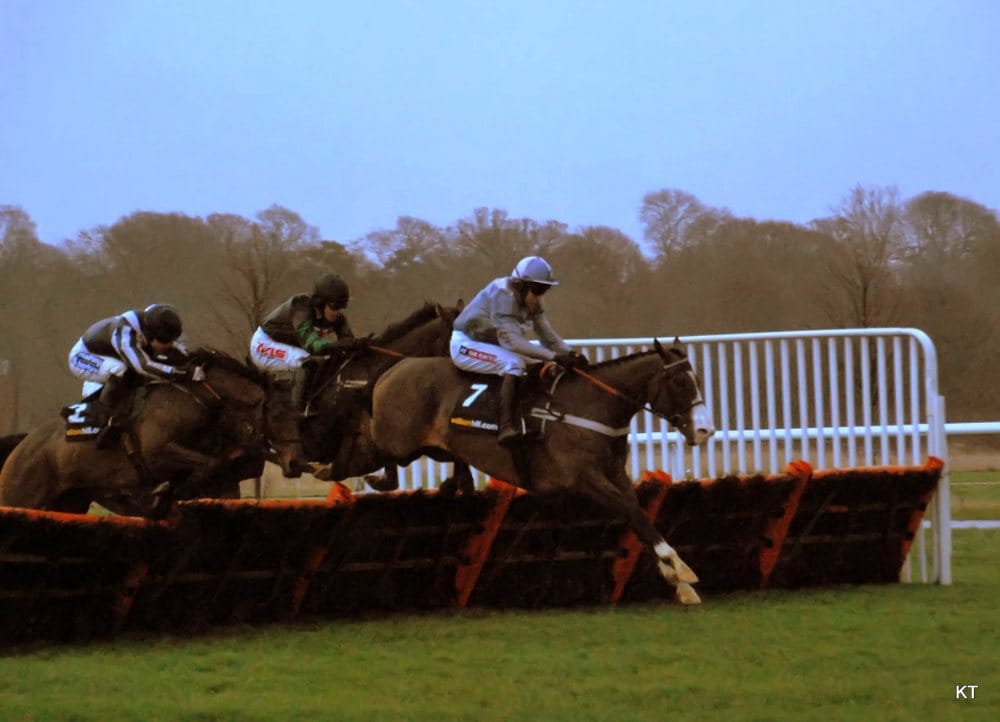
The received wisdom is “Kempton equals a speed track,” and there’s truth in it — flat, tight turns and fair fences reward a horse that travels strongly and can quicken. But the more precise read, from Sky Sports’ course analysis, is that Kempton “can either present itself as a test of speed or stamina, depending on the pace of a race”: a steadily-run race turns into a sprint from the second-last, favouring the fastest finisher, while a genuine end-to-end gallop over three miles with no let-up can be a searching stamina test in its own right. Compare that to the Cheltenham Gold Cup (3m2½f, 22 fences on Cheltenham’s New Course, with a long uphill run to the line that has found out plenty of talented non-stayers) and the Grand National (4m2½f, 30 jumps, taller and more varied fences up to 5ft 2in) — Kempton’s “easy,” fair fences ask for fluency and accuracy at speed, not raw scale.
Kempton specialists who couldn’t repeat it at Cheltenham
The more instructive case-study group. One Man won back-to-back King Georges (1995, 1996) but was a beaten favourite in the Gold Cup twice, before finding his true level over two miles. Wayward Lad became the first three-time King George winner (1982, 1983, 1985) but never won at the Cheltenham Festival in nine attempts. Cue Card (King George 2015) fell three out while travelling strongly in the 2016 Gold Cup, chasing the Triple Crown bonus. Against that, Best Mate, Kauto Star, Desert Orchid and Long Run are the rare horses whose class transferred cleanly between both tests — see Where The Form Leads, below.
One further wrinkle, worth flagging honestly rather than stated as settled fact: a single specialist course guide describes Kempton as resembling “the easy French provincial courses,” offered as an explanation for a historically decent record among French-trained raiders here. No other source corroborates that specific comparison, so treat it as one analyst’s theory rather than established consensus — though the underlying French record is real, if modest and now dated (François Doumen trained five King George winners between 1987 and 2000; nothing since 2011).
Betting Strategy
Three things worth weighing before backing a King George runner:
Watch the Betfair Chase first
It’s the single biggest form line into this race, and it’s also the first leg of a bonus that keeps serious money engaged all autumn. A horse arriving off a big Betfair Chase run is a different proposition to one with no autumn form at all.
A King George win doesn’t guarantee a Gold Cup one
As the Where The Form Leads section sets out, this race reliably identifies genuine Gold Cup contenders — it’s a much poorer guide to who actually wins in March. Respect a strong placed effort as much as the winner.
Early ante-post usually isn’t NRNB-covered
The best prices come before Non-Runner No Bet protection typically kicks in around the Betfair Chase. An early King George bet on a small-field, injury-prone type is a real, uncovered stake — size it accordingly.
Enclosures and the Boxing Day Culture
Kempton on Boxing Day occupies a genuinely different cultural slot to Royal Ascot, Cheltenham or the Grand National. It’s explicitly pitched as a release valve — “the perfect way to blow away the post-Christmas blues” — built for people who’ve been sat round a table with relatives since the 25th and want somewhere to take the extended family that isn’t the sofa.
Festival Enclosure — from £15.30
Cheapest, furthest from the winning post, no Parade Ring or grandstand access, but good views of the home straight and the last fence. Boxing-Day-exclusive — it doesn’t even exist on the Festival’s second day.
Paddock & Premier — from £36 / £45
Paddock buys ground-floor grandstand access plus the Parade Ring and Winners’ Enclosure; Premier adds first-floor grandstand access with prime sightlines near the winning post.
Premier Seats
A guaranteed individual seat, above general Premier admission.
Kauto Club
Hospitality tier: Kauto Star Bar access with a window into the Weighing Room, a racecard, and a complimentary ticket to the following February’s Ladbrokes Trophy Day. A standalone Kauto Star Bar package runs from around £125pp.
Dress code is where Kempton diverges completely from Ascot or Cheltenham. The official line, verbatim, is to come “dressed to feel your best” — a sweatshirt, jeans and clean trainers are explicitly endorsed as equally valid to a suit or glamorous dress. There’s no royal enclosure, no morning-dress rule, no hat requirement anywhere on the card; the only restrictions are no ripped denim, no football shirts, and fancy dress must not be vulgar or offensive.
Kempton’s own honest warning
Unusually for a racecourse, Kempton’s own FAQ plainly states Boxing Day is “extremely crowded,” that navigating the course with small children is genuinely difficult, and that there’s no on-site childcare. Under-18s go free (excluding Premier Seats and the Kauto Club) with a responsible adult — one paying adult can bring up to three children — and 18-24s get 50% off via RacePass. Prices above are for the most recently completed renewal (2025); 2026 pricing wasn’t yet published at the time of writing.
Getting There
Kempton Park sits at Sunbury-on-Thames, Surrey, just 16 miles from central London in the M25/M3 commuter belt — and that proximity is a genuine double edge. Most attendees day-trip rather than stay over, since the whole meeting is a single Boxing Day afternoon; if you do want to stay, look toward Staines, Sunbury or Kingston upon Thames rather than expecting racecourse-specific accommodation packages, which don’t really exist for a one-day fixture this close to London.
The one trap that catches everyone out: there is no train
Kempton Park has its own on-site station, about 200 yards from the North entrance — but South Western Railway runs zero services anywhere on its network on 25 and 26 December. This isn’t a thin holiday timetable, it’s a full shutdown, including the on-site station itself. A reduced, Sunday-style service resumes from 27 December — too late to help. This is precisely the trap that doesn’t exist at Cheltenham or Aintree, whose festivals fall on ordinary operating days.
The realistic car-free route is the District line to Richmond, then a local bus into Sunbury (routes 216 and 235 serve the area) — budget around two hours door-to-gate from central London, and treat the return leg as the harder half of the day, since services thin out faster after the last race than they do on the way in. The Underground itself isn’t a clean fallback either: there’s no Night Tube or Night Overground on Boxing Day, and most Overground lines don’t run at all.
By road: M25 Junction 12 to M3 Junction 1, then under a mile along the A308 between Sunbury-on-Thames and Hampton Court. Kempton sits just outside the Ultra Low Emission Zone, though some London-side approach roads run close to the boundary. A free Park & Ride shuttle runs from a BP site on Cadbury Road (postcode TW16 7LN for satnav), about 10 minutes from the course, through the morning and resuming once racing ends. On-course parking is normally free on racedays, but charges apply specifically during the Christmas Festival — the exact current figure wasn’t published at the time of writing.
Betting On The Day
Kempton runs two parallel betting systems on Boxing Day. Independent on-course bookmakers work exactly as you’d expect — approach a pitch, state the racecard number, bet type and stake (“£5 win on number three”), and keep the paper ticket safe, since it’s your only proof of the wager; return to the same bookmaker once the result is “weighed in” to collect. The Tote is separate pool betting: stakes go into a shared pot and the dividend is only fixed after the race, which can make it better value on wide-field markets, if less transparent in the moment.
Cash works here, even though the rest of the venue doesn’t take it
Kempton’s own FAQ states plainly that cash may be used with the Tote and all on-course bookmakers — a deliberate carve-out, since admission, food and drink on site are otherwise cashless/card-only. One genuinely useful, non-obvious tip: current UK law bans credit-funded bets, and Apple Pay can’t always verify it’s routing through a debit card, so it often simply doesn’t work at the betting pitches even though it works everywhere else on site.
Best Odds Guaranteed and Non-Runner No Bet both matter more here than on a routine card, for a specific reason: King George fields are small (five to ten runners, eight in 2025) and dominated by a handful of star names, so a single defection reshapes the market far more than it would in a 20-runner handicap — and prices can move sharply in the final hour as big money floods in on the day (Fact To File drifted from around 5/2 out to 8/1 in places in 2025 alone). Boxing Day is widely described as the most-bet-on day of the British jumps calendar outside Cheltenham Festival week.
Watching from home: ITV Racing covers the King George live and free-to-air on ITV1/ITVX, with Racing TV and Sky Sports Racing as subscription alternatives. The race has drawn a peak audience over 900,000 in recent years (a 2023-specific figure; no separately published number exists for more recent renewals) — several times the roughly 17,000 who attend in person. Accessibility: wheelchair viewing areas exist on all ground-floor boxes, the Grandstand has lifts and disabled toilets on every floor (the Clubhouse only to the first floor), and disabled parking bays are allocated on a first-come, first-served basis. One Boxing-Day-specific caution worth knowing: on the Christmas Festival’s busiest days, some overflow parking areas are on grass, which can affect wheelchair access — worth calling the racecourse office (01932 782292) ahead if this affects your visit.
Boxing Day draws a huge once-a-year betting crowd, many having their only flutter of the year alongside the football coupon. Stake what you can afford to lose, and if it stops being fun, help is there — see our page on Responsible Gambling.
Where the Form Leads
The King George’s reputation as “the key Gold Cup trial” is well-earned but needs careful handling. The honest story is a strong positive correlation with a low hit-rate on the specific thing punters actually want — backing the same horse to win both. The most useful framing: this race reliably identifies genuine Gold Cup contenders. It rarely hands you the actual Gold Cup winner on a plate three months in advance. See our Cheltenham Festival guide for the Gold Cup itself.
Kauto Star is the gold standard: five King Georges (2006-2009, 2011) converted into two Gold Cups (2007, 2009), with a second in 2008 — four Cheltenham frames from six attempts, and the only horse ever to complete the Betfair Chase-King George-Gold Cup Triple Crown, in 2006/07. Desert Orchid supplies the emotional high point: four King Georges (1986, 1988, 1989, 1990) bracketing a single Gold Cup win in 1989. Long Run is arguably the purest “trial worked exactly as advertised” story: won the December 2010 King George as a six-year-old, then backed it up by winning the 2011 Gold Cup outright. Best Mate complicates the tidy version of this story — he won three Gold Cups (2002-2004) but only one King George (2002), and was in truth already the best staying chaser in training before Kempton ever entered the picture.
The bounce, and the freshest example going
Tornado Flyer (2021 King George) simply pulled up in the 2022 Gold Cup, won by A Plus Tard — who hadn’t even run in that King George, having prepped via the Betfair Chase instead. The freshest, most vivid case: The Jukebox Man won the 2025 King George in a sensational photo finish, arrived at Cheltenham 2026 undefeated over fences and near the head of the market — then finished a well-beaten 8th in the 2026 Gold Cup, won by Gaelic Warrior. Three months is a short turnaround for a staying chaser to recover from a white-knuckle Boxing Day battle and reproduce peak form on a stiffer, hillier track.
The essential counterweight: Galopin Des Champs, the dominant Gold Cup horse of the current era (winner 2023 and 2024), has never run in the King George at all — his connections route him via Ireland instead. The King George is a major trial, arguably the most historically decorated one, but it isn’t universal, and a Gold Cup fancy shouldn’t be discounted simply for skipping Kempton. On the raw numbers: of the last 12 King George winners, 10 went on to contest the following Gold Cup (the two exceptions were injury and a deliberate diversion to the Grand National instead) — a high running-on rate, just not a high winning one.
History and Prestige
The race began modestly: on 26 February 1937, the existing Manor Selling Chase at Kempton’s February meeting was renamed in honour of the newly acceded King George VI, who had become king only weeks earlier after Edward VIII’s abdication — the race actually marks the new reign, not literally the coronation, which didn’t take place until that May. The inaugural running had just four runners, won by 12-year-old Southern Hero, who remains the race’s oldest-ever winner. War intervened after only two renewals; Kempton closed for the duration. Racing resumed in 1946/47, and crucially the race was shifted to a new date — Boxing Day — a fixture it has held ever since, becoming the highlight of the Christmas programme almost immediately. Cottage Rake’s 1948 win (as reigning Gold Cup champion) and the first televised running in 1949 were early prestige builders. The race has been run away from Kempton only twice, both times at Sandown Park: the delayed 1995-96 renewal (postponed by snow and frost to 6 January 1996) and 2005 (during Kempton’s redevelopment).
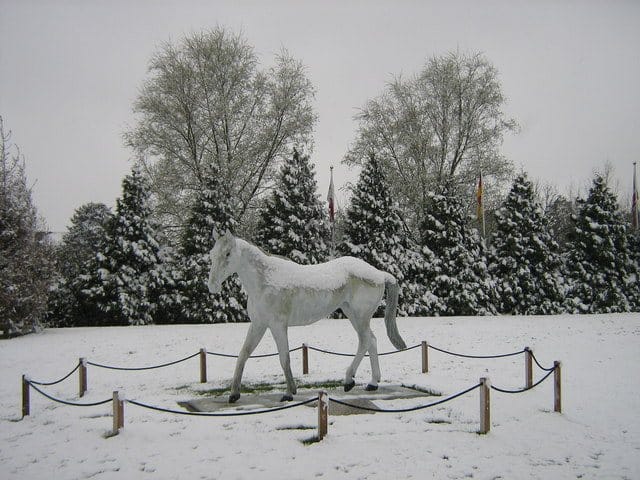
Desert Orchid set the record with four wins (1986, 1988, 1989, 1990), all confirmed identically across every source. His 1990 win, at age 11, is one of the sport’s most emotional moments — leading rival Sabin Du Loir fell seven fences out, and ‘Dessie’ produced a string of brilliant jumps to pull clear on what’s remembered as “a dull, grey day.” Worth stating precisely: that day was genuinely testing, but it wasn’t the legendary quagmire most associated with Desert Orchid lore — that belongs to his 1989 Cheltenham Gold Cup win, a different race entirely. Kauto Star broke the record with five wins (2006, 2007, 2008, 2009, 2011), all under Ruby Walsh for trainer Paul Nicholls. His 2009 win, by 36 lengths, broke Arkle’s 44-year-old race record of 30 lengths and prompted racing to retire its old “a distance” notation for enormous winning margins.
Getting the Kauto Star/Long Run sequence right
This is commonly reported backwards. The true order: Long Run won in 2010 (Kauto Star third, having burst a blood vessel); Kauto Star then beat Long Run into second in 2011, claiming his record fifth King George — a win, not a loss; his final season ended after a schooling-yard fall in February 2012, and he ran only once more (pulled up in that March’s Gold Cup) before retiring that October, so it was Long Run who reclaimed the crown on Boxing Day 2012, not Kauto Star reclaiming anything. Long Run’s two career wins are 2010 and 2012, sandwiching Kauto Star’s 2011 victory.
Beyond the two record-holders: Wayward Lad won three times (1982, 1983, 1985), with a long list of two-time winners spanning the decades — Pendil, Captain Christy, Silver Buck, The Fellow, See More Business, Kicking King, One Man, Silviniaco Conti, Clan Des Obeaux, and Long Run himself. On scale, the race has faded somewhat from its peak but remains a genuine institution: roughly 29,000 attended in Desert Orchid’s 1980s heyday, versus 17,195 in 2025 (itself up 3,332 on the year before) — still framed as one of the biggest jumps days of the year outside Cheltenham and Aintree.
FAQ
When is the King George VI Chase 2026?
Is this a multi-day festival like Cheltenham?
What’s the dress code?
How reliable is King George form for the Gold Cup?
Can I get the train to Kempton on Boxing Day?
What happens if Boxing Day racing is called off?
See the reasoning, not just the result
FormDial posts every bet before the off, with the full case behind it — win or lose, logged either way.